
- Renewable Generation
- Small Hydro
- Run-of-River
- Turnkey EPC
Small & Run-of-River Hydro
Mini | Micro | Run-of-River | Canal-Drop | Weirs | Turbines
Steady river power with little or no storage.
Small hydro turns the natural flow of hill streams, rivers and irrigation canals into firm, low-cost electricity with a small footprint. BARREL takes small, mini and micro hydro projects from site reconnaissance and hydrology through design, approvals, equipment, construction and grid connection to long-term operation.
FFlow
River discharge through the year
HHead
Height of fall from intake to turbine
GGrid
Feeder, substation or local mini-grid
- Plant size
- <100 kW–25 MW
- Head range
- 2–1,000 m
- Typical PLF
- 40–60 %
- Asset life
- 35+ yrs
- Grid connection
- 11–132 kV
Section 01
Small & Run-of-River Hydro — Overview
A run-of-river plant diverts part of a river's flow through an intake and a water conductor to a powerhouse and returns it downstream, using the natural flow with little or no storage. Small hydro covers such plants up to about 25 MW (India's definition; many countries use 10 MW).
Because there is no large reservoir, submergence and resettlement are minimal, construction is quick and the plant can serve a remote valley, an industry or the grid.
1.1Size classes
| Class | Capacity | Typical use |
|---|---|---|
| Pico hydro | Below 5 kW | A home or a few houses, battery charging |
| Micro hydro | 5–100 kW | Villages, tea estates, remote mini-grids |
| Mini hydro | 100 kW–2 MW | Mini-grids, captive industry, grid feeders |
| Small hydro | 2–25 MW | Grid-connected IPP and utility projects |
Class limits differ by country and regulator; India's MNRE treats plants up to 25 MW as small hydro.
1.2Why small hydro
01
Predictable energy
Flow follows the hydrological year; output is forecastable days ahead, unlike sun or wind.
02
Long life, low running cost
Civil works last 50+ years and electro-mechanical units 35+; no fuel bill.
03
Small footprint
No large reservoir: little submergence, minimal resettlement, short build times of 2–3 years.
04
Remote supply
Powers hill villages and estates far from the grid as an island mini-grid.
05
Grid support
Synchronous generators give inertia and reactive power; pondage gives a few hours of peaking.
06
Local development
Roads, jobs and local revenue share for the valley that hosts the plant.
Section 02
Scheme Types and Layouts
The layout follows the topography: where the head is gained and how the water is carried to the turbine decide the scheme.
01
HillsHigh-head diversion
Weir and intake on a steep stream, a long headrace channel or tunnel, forebay and steel penstock down to the powerhouse.
02
PlainsLow-head run-of-river
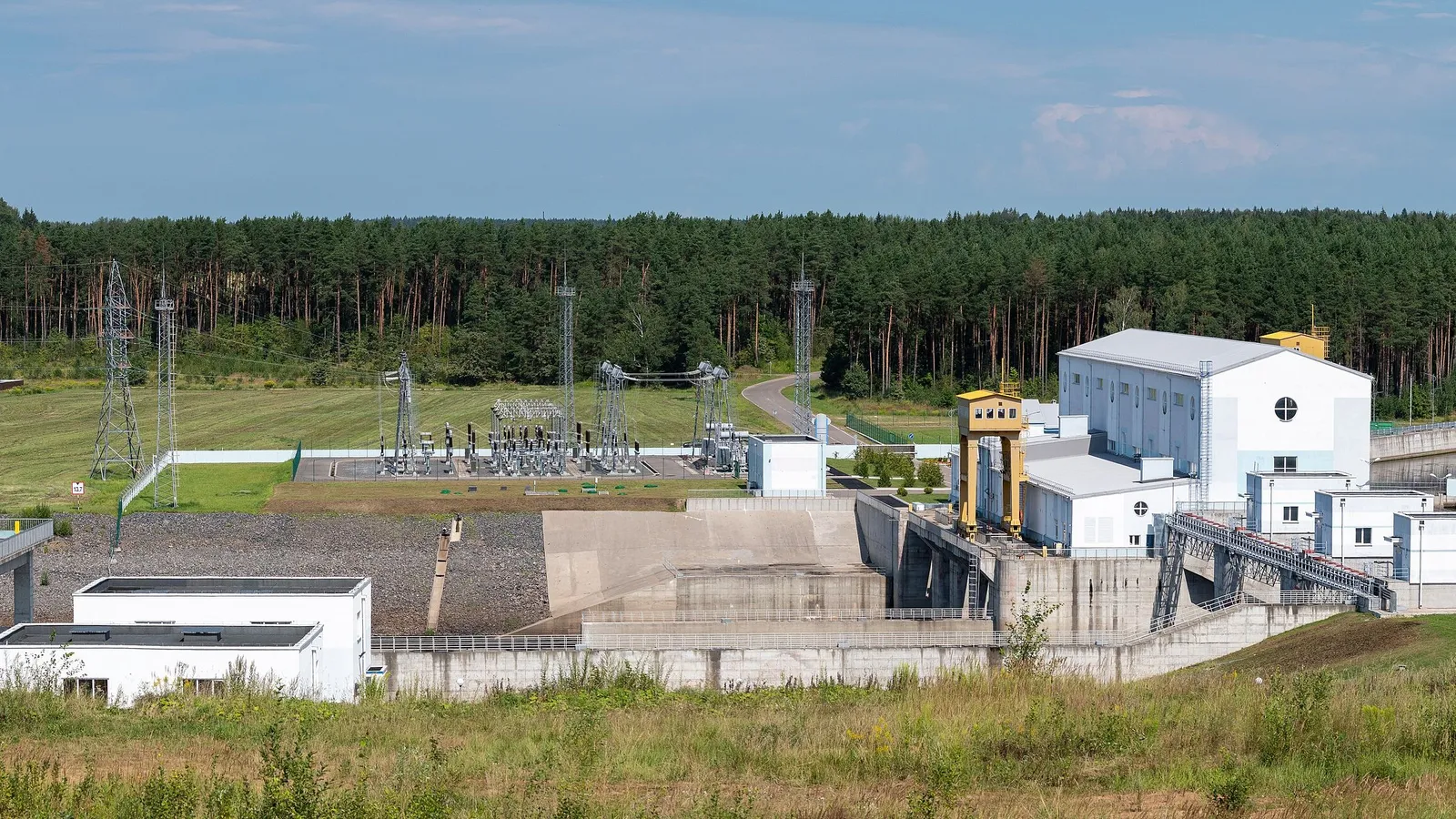
A barrage or weir raises the river a few metres; the powerhouse sits in the barrage or a short channel beside it.
03
IrrigationCanal-drop
Uses the falls built into irrigation canals; flow follows the canal running schedule.
04
Existing damDam-toe
A powerhouse at the foot of an irrigation or water-supply dam using its releases.
05
PeakingPondage run-of-river
A small pond above the intake stores a few hours of flow to generate at peak tariff times.
06
UtilitiesIn-pipe / conduit
Turbines in water-supply mains or treated-effluent outfalls where pressure is otherwise wasted.
2.1Water path of a diversion scheme
- Weir
- Intake
- Desilting basin
- Headrace
- Forebay
- Penstock
- Turbine
- Tailrace
- River
Section 03
Hydrology, Head and Site Assessment
Energy depends on how much water flows for how many days at what head. A sound flow series and an accurate head survey are the base of every bankable small hydro project.
3.1Power of a small hydro plant
Electrical output
P (kW) = 9.81 × Q × Hnet × η
Annual energy E = Σ P × hours, from the flow duration curve
Design flow is usually chosen near the 30–40 % exceedance flow of the flow duration curve, after leaving the environmental flow in the river.
| Symbol | Meaning |
|---|---|
| Q | Turbine flow, m³/s |
| Hnet | Net head, m (gross head less channel and penstock losses) |
| η | Overall efficiency, 0.80–0.88 for small units |
| 9.81 | ρ·g/1000 for water, kW per (m³/s · m) |
3.2Studies before design
Hydrology
5- Gauge and discharge measurement (current meter, ADCP)
- Long-term flow series by catchment correlation
- Flow duration curve and dependable flows
- Flood frequency for weir and powerhouse safety
- Sediment load and grain size
Site and geology
5- Contour and route survey (DGPS, drone LiDAR)
- Geological mapping of weir, channel and powerhouse
- Test pits, drilling and slope stability
- Seismic zone and design ground motion
- Access road and transport route survey
Section 04
Civil and Hydraulic Structures
In small hydro the civil works are most of the cost; good intake and desilting design protects the turbines from sand and keeps the plant running.
| Structure | Purpose | Design points |
|---|---|---|
| Diversion weir / barrage | Raises water level to feed the intake | Flood passage, energy dissipation, fish pass, e-flow release |
| Intake with trash rack | Admits design flow, keeps debris out | Approach velocity, trash-rack cleaning, gates and stoplogs |
| Desilting basin | Settles sand that would erode runners | Particle size to remove (often 0.2 mm), flushing system |
| Headrace channel / tunnel | Carries water at a gentle slope | Lining, cross-drainage, landslide protection |
| Forebay | Smooths flow into the penstock | Submergence against vortices, spillway, sediment flushing |
| Penstock | Pressure pipe down to the turbine | Steel / GRP / HDPE, surge, anchor and saddle blocks |
| Powerhouse and tailrace | Houses units, returns water | Flood level, crane, unit spacing, tailwater level |
Section 05
Turbines, Generators and Electro-Mechanical Equipment
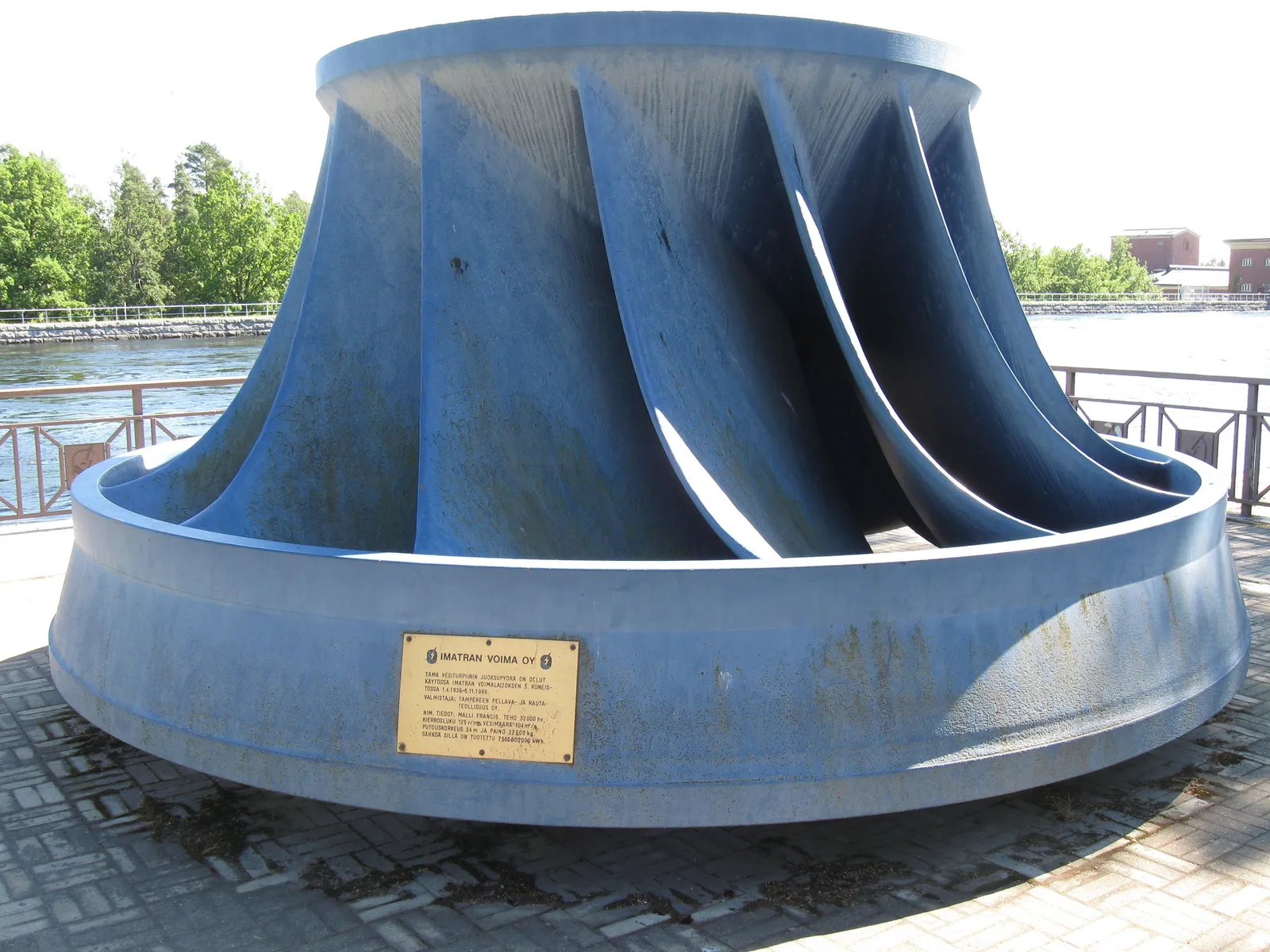
The turbine is chosen from head and flow: impulse turbines for high head and small flows, reaction turbines for medium and low heads.
5.1Turbine selection
| Turbine | Head range | Notes |
|---|---|---|
| Pelton | 50–1,000 m | Impulse, one to six jets; good part-load efficiency |
| Turgo | 30–300 m | Impulse, higher flow than Pelton for its size |
| Crossflow (Banki-Michell) | 5–100 m | Simple, robust, flat efficiency curve; popular for micro hydro |
| Francis | 20–300 m | Reaction, high peak efficiency, spiral casing |
| Kaplan / bulb / S-type | 2–30 m | Adjustable blades for varying flow at low head |
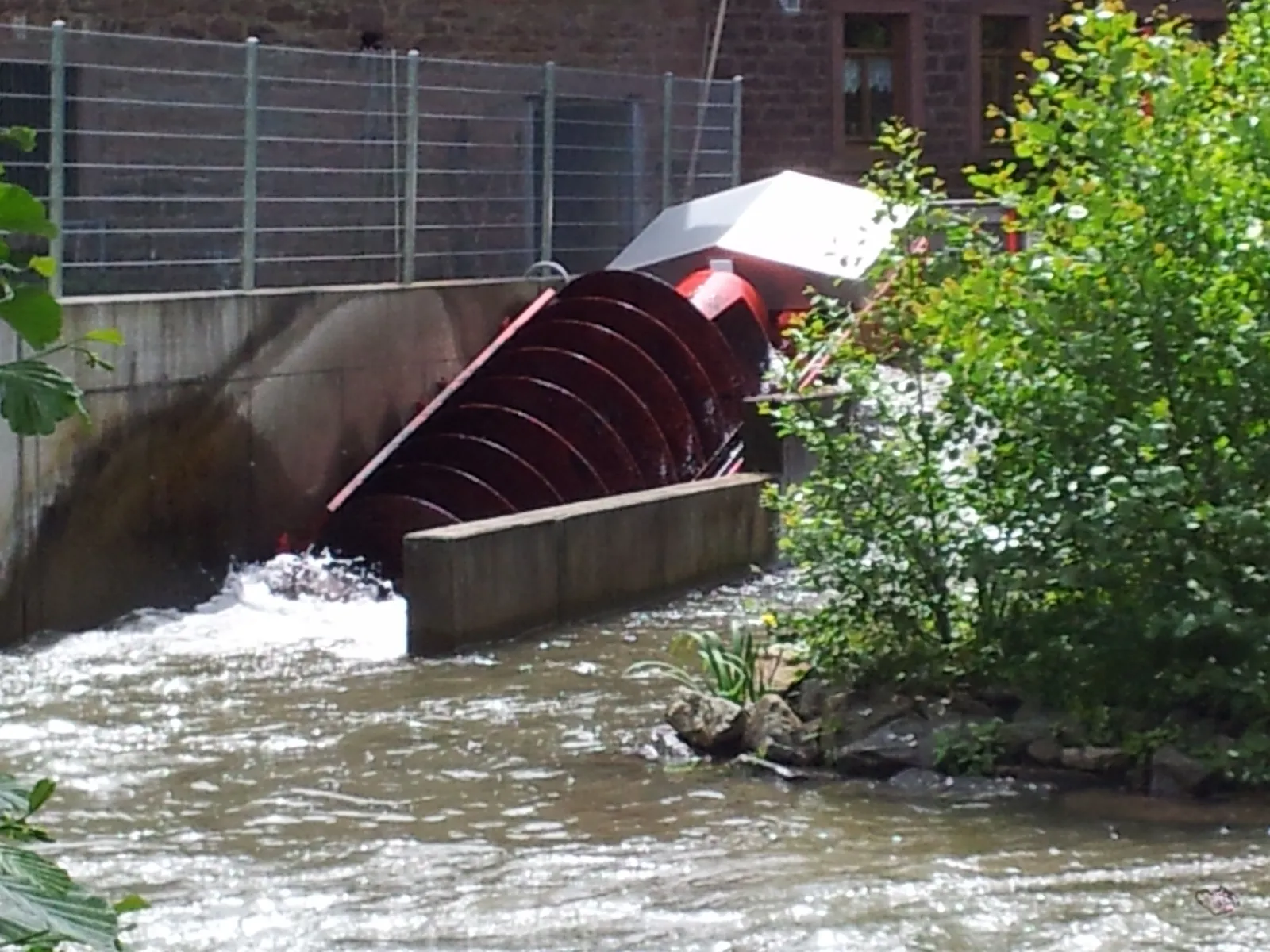
| Archimedes screw / VLH | 1–10 m | Very low head, fish-friendly |
5.2Electro-mechanical package
- Main inlet valve (butterfly or spherical)
- Turbine with governor (electronic / hydraulic)
- Synchronous or induction generator
- Excitation and AVR
- Unit control, protection and SCADA
- Step-up transformer and switchyard
- Cooling water, drainage and dewatering
- EOT crane and auxiliaries
- Electronic load controller for isolated mini-grids
Section 06
Grid Connection and Mini-Grids
Most small hydro plants feed an 11, 33, 66 or 132 kV line to the nearest substation; remote micro plants run their own village grid.
- Evacuation study and connectivity application to the utility
- Line route survey, right of way and forest clearance
- Grid code compliance: frequency, voltage, fault ride-through
- Metering (ABT / SCADA), telemetry to load despatch centre
- Island operation with electronic load controller
- Hybrid with solar and battery for dry-season firming
Hill sites often face long evacuation lines; sharing a pooling substation with neighbouring projects can cut the cost per MW.
Section 07
Project Development and Approvals
Small hydro sites are usually allotted by the state government; the developer then prepares a DPR and obtains clearances before financial close.
- 1Site identification and pre-feasibility
- 2State allotment / implementation agreement
- 3Hydrology and topographic surveys
- 4Detailed project report (DPR) and techno-economic clearance
- 5Water-use and irrigation department consent
- 6Forest, wildlife and environmental clearances as applicable
- 7Land purchase or lease, local consultations
- 8Grid connectivity and power purchase agreement
- 9Financial close and EPC award
Plants up to 25 MW do not generally need a central environmental clearance in India, but forest land, protected areas and state rules still apply.
Section 08
Turnkey EPC Delivery
BARREL can deliver the whole plant under one contract or manage separate civil, hydro-mechanical and electro-mechanical packages.
Civil package
4- Access roads and camps
- Weir, intake and desilting
- Channel / tunnel and forebay
- Powerhouse and tailrace
Hydro-mechanical
4- Gates and hoists
- Trash racks and cleaning machine
- Penstock fabrication and erection
- Stoplogs and embedded parts
Electro-mechanical
4- Turbine-generator sets
- Control, protection, SCADA
- Transformer and switchyard
- Transmission line and bay
8.1Typical schedule (5–25 MW)
- Surveys 3–6 mo
- DPR & approvals 6–12 mo
- Construction 18–30 mo
- Commissioning 2–3 mo
Section 09
Operation and Maintenance
Silt erosion and monsoon floods are the main enemies of small hydro; disciplined O&M keeps availability above 95 %.
- Daily intake and trash-rack cleaning
- Desilting basin flushing in monsoon
- Runner and nozzle repair, hard coating against erosion
- Annual maintenance in the lean season
- Governor, excitation and protection testing
- Remote monitoring and generation forecasting
- Flood-season operating rules and shutdowns
- Spares stock for bearings, seals and nozzles
- Renovation, modernisation and uprating of old plants
Section 10
Finance and Commercial Models
Small hydro sells power under a long-term PPA with a utility, to captive users under open access, or into the power exchange.
| Item | Typical range (India, indicative) |
|---|---|
| Capital cost | ₹8–12 crore per MW (higher for remote hill sites) |
| Plant load factor | 40–60 % depending on hydrology |
| Construction period | 2–3 years |
| Revenue options | State PPA, open access to industry, exchange sale, RE certificates |
| Debt tenor | 12–15 years with moratorium during construction |
Figures are indicative for early screening only; each project needs its own cost estimate and financial model.
Section 11
BARREL Services for Small Hydro
One partner from the first site visit to decades of operation, backed by BARREL's network of consultants, manufacturers and contractors.
- Site identification and reconnaissance
- Hydrology, surveys and geology
- Pre-feasibility and DPR
- Approvals and allotment support
- Owner's engineer and lender's engineer
- Turbine-generator sourcing
- Turnkey EPC / EPCM
- Grid connectivity and PPA support
- Project finance facilitation
- O&M and remote monitoring
- Renovation and uprating
- Acquisition due diligence
Project desk
Build your small hydro project with BARREL
From the first flow measurement to steady river power.
Developing a new run-of-river site, buying turbines, upgrading an old plant or looking for an EPC or O&M partner — tell us about the site and we will respond with the next steps.
Project categories
- High-head diversion
- Low-head run-of-river
- Canal-drop
- Dam-toe
- Micro hydro mini-grid
- Renovation & uprating