
- Advanced Generation
- Fusion
- ITER
- Supply Chain
Fusion Energy
Tokamaks | Stellarators | Inertial | Magnetised Target | ITER | Supply Chain
The power of the stars, still on the road to the grid.
Fusion joins light nuclei to release energy with no carbon emissions, no long-lived high-level waste of the fission kind and no chain reaction to run away. It is not yet a commercial power source: no fusion plant has delivered net electricity to a grid. BARREL follows the field closely and supports industry, research groups and investors with technology briefings, supply-chain coordination and readiness studies for the decades ahead.
CConfinement
Hold a plasma hot and dense long enough
FFuel cycle
Deuterium from water, tritium bred from lithium
MMaterials
Walls that survive heat and 14 MeV neutrons
- Energy per D-T fusion
- 17.6 MeV
- Plasma temperature
- ~150 M°C
- ITER plasma gain goal
- Q = 10
- Nations in ITER, incl. India
- 35
- Status today
- Pre-commercial
Section 01
Fusion Energy — Overview
In fusion, two light nuclei — in practical designs deuterium and tritium — collide fast enough to overcome their electric repulsion and fuse into helium and a neutron, releasing about four million times more energy per kilogram than burning coal.
Science has shown that fusion can produce more energy than the plasma receives, but turning that into a reliable, affordable power plant still needs advances in plasma control, materials, tritium handling and plant engineering. It is best seen as a long-term option, not a solution for today's capacity plans.
1.1Fusion and fission compared
| Aspect | Fission (today's reactors) | Fusion (in development) |
|---|---|---|
| Reaction | Heavy nuclei (uranium, plutonium) split | Light nuclei (deuterium, tritium) join |
| Fuel | Enriched uranium, mined and processed | Deuterium from water; tritium bred from lithium |
| Runaway risk | Chain reaction must be controlled | No chain reaction; plasma stops if conditions are lost |
| Waste | Long-lived spent fuel | Activated structures, mostly short- to medium-lived; tritium to manage |
| Status | Mature, about 10 % of world electricity | Experimental; first pilot plants targeted in the 2030s |
1.2Milestones so far
01
2022Laser ignition
The US National Ignition Facility produced more fusion energy than the laser energy delivered to the target — target gain above 1, though far below wall-plug break-even.
02
2023Record fusion energy
Europe's JET tokamak released 69 MJ of fusion energy in a single D-T pulse in its final campaign.
03
2020sLong pulses
Superconducting tokamaks in China, Korea and France have held hot plasmas for several minutes, a step towards steady operation.
04
2020sOptimised stellarator
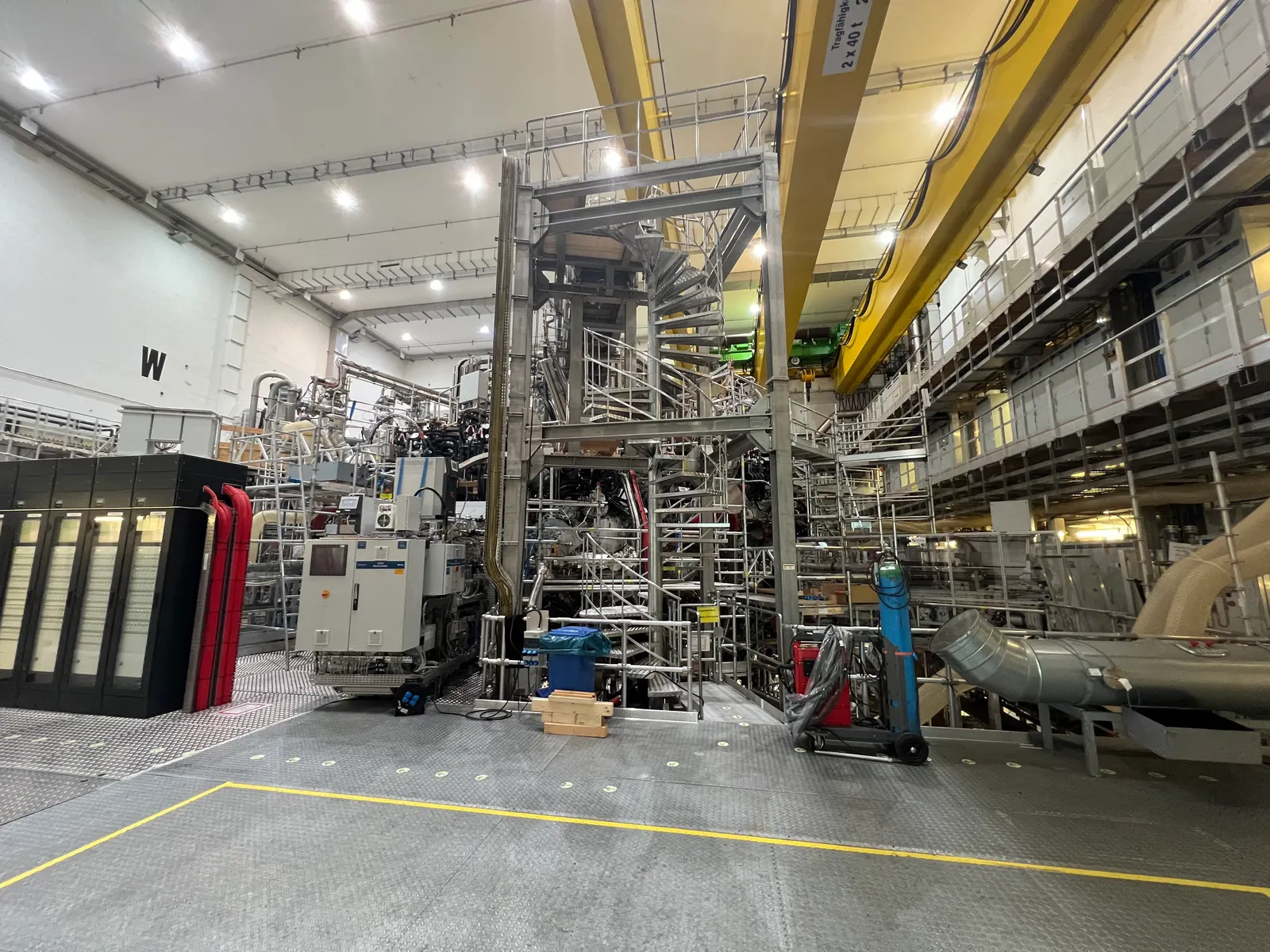
Germany's Wendelstein 7-X has shown that a computer-optimised stellarator can confine plasma well over long pulses.
Section 02
How Fusion Works
A fusion plant must heat fuel into a plasma, confine it long enough for reactions to outpace losses, capture the neutron energy as heat and breed new tritium — all at once and continuously.
2.1Energy path of a D-T power plant
- D-T fuel injection
- Heated plasma
- Fusion: He + neutron
- Blanket absorbs neutrons
- Heat + tritium bred
- Steam or gas turbine
- Electricity
2.2The three jobs of a fusion core
Heat
4- Ohmic heating from plasma current
- Neutral beam injection
- Radio-frequency waves (ion and electron cyclotron)
- Alpha particles self-heating a burning plasma
Confine
3- Magnetic fields (tokamak, stellarator)
- Inertia of a compressed pellet (laser or pulsed power)
- Hybrid: magnetised plasma compressed by a liner
Exhaust and capture
4- Divertor removes helium ash and heat
- Blanket turns neutron energy into heat
- Tritium extracted and returned to fuel
- Vacuum pumping and fuel recycling
Scientific gain (fusion power over heating power) is not the same as engineering gain. A plant must cover heating efficiency, magnets, cryogenics and pumps, so it needs a plasma gain well above 10 to export net electricity.
Section 03
Confinement Concepts
Several routes are being pursued in parallel. The tokamak has the deepest data base; the others trade physics maturity for engineering advantages.
01
MagneticTokamak
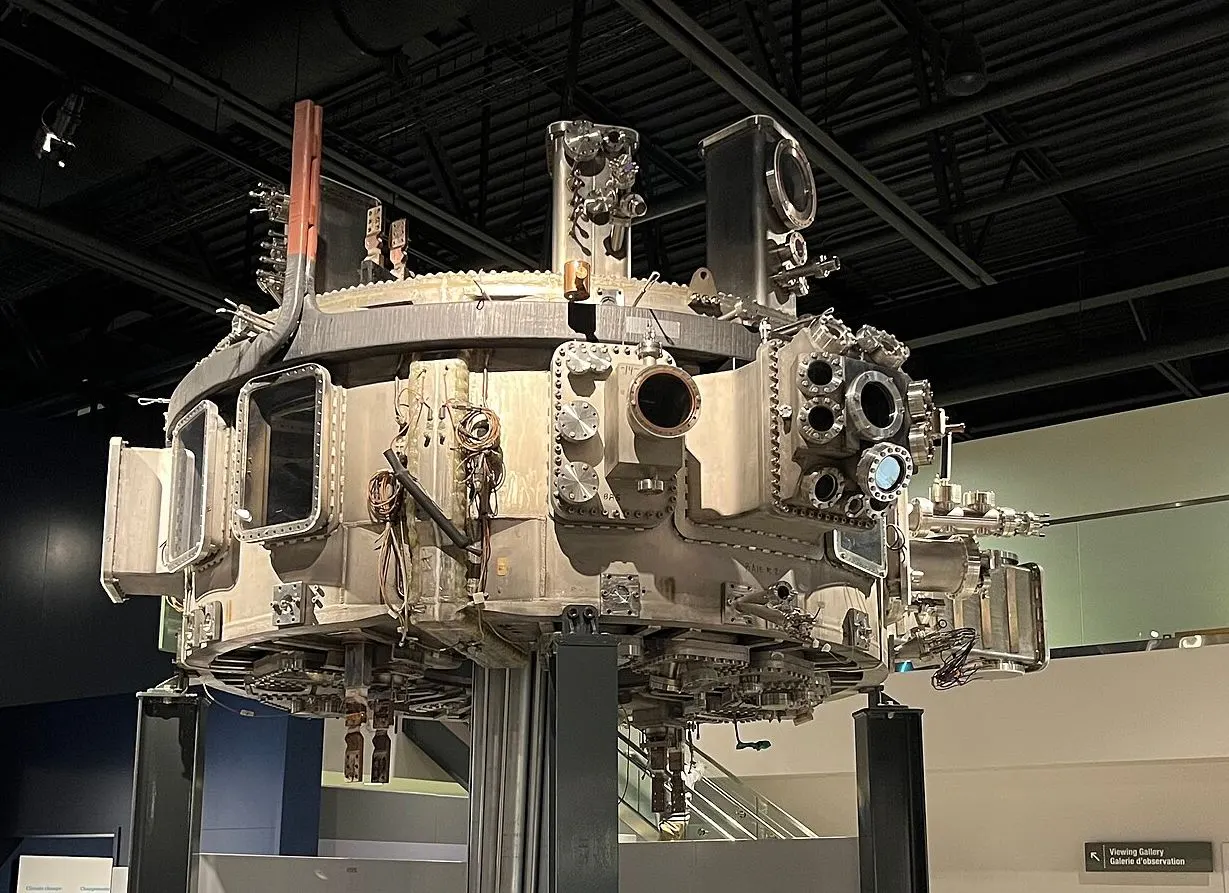
A doughnut-shaped plasma held by toroidal coils plus a current driven in the plasma. Most studied; ITER, JT-60SA, EAST, KSTAR and India's SST-1 and ADITYA-U are tokamaks.
02
MagneticSpherical tokamak
A compact, cored-apple shape that reaches higher pressure for a given field; attractive for smaller pilot plants.
03
MagneticStellarator
Twisted external coils make the confining field, so no plasma current is needed: naturally steady and free of current disruptions, but complex to build.
04
Laser / pulsedInertial confinement
Lasers or pulsed power crush a fuel capsule in nanoseconds. Ignition shown; a plant needs high repetition rate, cheap targets and efficient drivers.
05
HybridMagnetised target fusion
A magnetised plasma is compressed mechanically or by a liner, aiming for densities between magnetic and inertial approaches.
06
Early stageOther concepts
Field-reversed configurations, Z-pinches, mirrors and alternative fuels such as D-He3 or p-B11 at much higher temperatures.
3.1Indicative comparison
| Concept | Physics maturity | Main engineering challenge |
|---|---|---|
| Tokamak | Highest | Disruptions, steady-state current drive, size |
| Stellarator | High and rising | Coil precision and manufacture |
| Inertial (laser) | Ignition demonstrated | Repetition rate, driver efficiency, target cost |
| Magnetised target | Moderate | Repeated compression, liner and wall survival |
Section 04
Plasma Physics and the Path to Gain
Whether a plasma can sustain itself is judged by how dense, how hot and how well insulated it is. The product of the three is the single best yardstick of progress.
4.1Lawson triple product for D-T ignition
Ignition condition
n × T × τE ≥ ~3 × 10²¹ keV·s/m³
Plasma gain Q = P fusion ÷ P heating; ITER aims for Q = 10 (500 MW from 50 MW)
The minimum of the triple product for D-T lies near 10–20 keV (roughly 100–200 million °C). Below the threshold, external heating must keep the plasma burning; above it, alpha-particle heating alone sustains the burn (ignition).
| Symbol | Meaning |
|---|---|
| n | Fuel ion density, particles per m³ |
| T | Ion temperature, keV (1 keV ≈ 11.6 million °C) |
| τE | Energy confinement time, s |
| Q | Ratio of fusion power to external heating power |
4.2Physics questions still open
- Control of a burning, self-heated plasma
- Avoiding or mitigating disruptions
- Edge instabilities and heat loads on the divertor
- Steady-state current drive for tokamaks
- Plasma-wall interaction with tungsten
- Fast-ion and alpha-particle behaviour
- Scaling from today's devices to plant size
- Real-time control with machine learning and digital twins
Section 05
Fuel Cycle and Tritium Breeding
Deuterium is plentiful in water. Tritium is radioactive (half-life about 12.3 years) and scarce: the world inventory is a few tens of kilograms, mostly from heavy-water reactors. A D-T power plant must therefore breed its own tritium from lithium in a blanket around the plasma.
5.1Key reactions
| Reaction | Energy | Role |
|---|---|---|
| D + T → He-4 + n | 17.6 MeV (3.5 He, 14.1 n) | Main power reaction |
| Li-6 + n → T + He-4 | +4.8 MeV | Main tritium-breeding reaction |
| Li-7 + n → T + He-4 + n | −2.5 MeV | Breeds tritium and frees a neutron |
| Be-9 or Pb + n → 2n + … | Absorbs energy | Neutron multiplier in the blanket |
5.2Blanket concepts under test
Solid breeder
3- Lithium ceramic pebbles (Li4SiO4, Li2TiO3)
- Beryllium multiplier
- Helium cooled
Liquid breeder
3- Lead-lithium eutectic
- Water, helium or dual cooling
- Self-cooled options at high temperature
India's test blanket
3- Lead-lithium ceramic breeder (LLCB) concept developed by Indian institutes
- Planned for the ITER test blanket programme
- Builds domestic know-how in tritium and lead-lithium handling
A plant needs a tritium breeding ratio above 1 (typically targeted at 1.05–1.15) to cover losses, decay and start-up inventory for new plants. This has not yet been demonstrated at scale; ITER's test blanket modules are the first integrated trial.
Section 06
ITER and India's Fusion Programme
ITER, under construction at Cadarache in southern France, is the world's largest fusion experiment, built by China, the European Union, India, Japan, Korea, Russia and the United States. It is designed to produce 500 MW of fusion power from 50 MW of heating and to test the technologies a power plant will need.
India joined ITER in 2005. Its in-kind contribution is managed by ITER-India, part of the Institute for Plasma Research (IPR) at Gandhinagar, Gujarat, under the Department of Atomic Energy.
6.1India's ITER packages (as publicly described)
Large structures
3- Cryostat — the stainless-steel vacuum shell around the machine
- In-wall shielding between vacuum vessel walls
- Cooling water system components
Cryogenics and power
4- Cryolines and cryo-distribution
- Ion cyclotron RF power sources
- Electron cyclotron (gyrotron) power sources
- Power supplies for diagnostic neutral beams
Indian research devices
3- ADITYA-U tokamak
- SST-1 steady-state superconducting tokamak
- Plasma, materials and blanket R&D at IPR and partner institutes
6.2ITER schedule (2024 baseline, indicative)
- Assembly through the 2020s
- Start of research operation ~2034
- Full magnetic energy ~2036
- D-T operation ~2039
ITER is an experiment and will not generate electricity. Its dates have moved before and may move again; plant-scale successors (DEMO-class machines) are planned by several members for later decades.
Section 07
Private Fusion and Pilot Plants
Alongside public programmes, several dozen private companies — mainly in the US, UK, Europe, Japan and China — are developing compact tokamaks, stellarators, laser and pulsed-power concepts. Cumulative private investment is reported in the order of US$ 10 billion by the mid-2020s (indicative).
01
HTS magnets
High-temperature superconducting tape allows much stronger fields, so a tokamak of the same performance can be several times smaller.
02
Faster iteration
Smaller machines, modular designs and simulation-led engineering shorten design cycles.
03
Public-private programmes
Milestone-based government programmes in the US, UK and elsewhere co-fund private pilot plant designs.
04
Grid ambitions
Several firms have announced targets for pilot plants or power-purchase agreements in the 2030s.
7.1An honest timeline (indicative)
| Stage | Expected window | Confidence |
|---|---|---|
| Net plasma gain in magnetic devices (Q > 1) | Late 2020s to mid-2030s | Moderate |
| Burning plasma at ITER scale (Q ≈ 10) | Around 2040 | Moderate |
| First pilot plants exporting some electricity | 2030s to 2040s | Low to moderate |
| Commercial fleets contributing meaningful power | 2050s and later | Low |
Announced private dates are company targets, not demonstrated results. Planning for India's 2030 and 2047 energy goals should rely on proven technologies; fusion is an option to prepare for, not to count on.
Section 08
The Fusion Industrial Supply Chain
Fusion machines are built by industry. Many of their parts draw on existing strengths in heavy fabrication, cryogenics, power electronics, vacuum and precision manufacturing — areas where Indian industry already supplies ITER.
8.1Main supply packages
| Package | What it involves | Typical skills |
|---|---|---|
| Superconducting magnets | LTS (Nb3Sn, NbTi) or HTS (REBCO) conductor, winding, insulation, quench protection | Conductor production, precision winding, cryogenic testing |
| Vacuum vessel and cryostat | Large double-wall stainless-steel vessels, ports, in-wall shielding | Heavy welding, NDT, tight tolerances, ultra-high vacuum |
| Plasma-facing components | Tungsten divertor and first wall, high-heat-flux cooling | Brazing, joining of tungsten to copper alloys, heat-flux testing |
| Remote handling | Robotic maintenance inside an activated machine | Robotics, radiation-tolerant electronics, virtual reality planning |
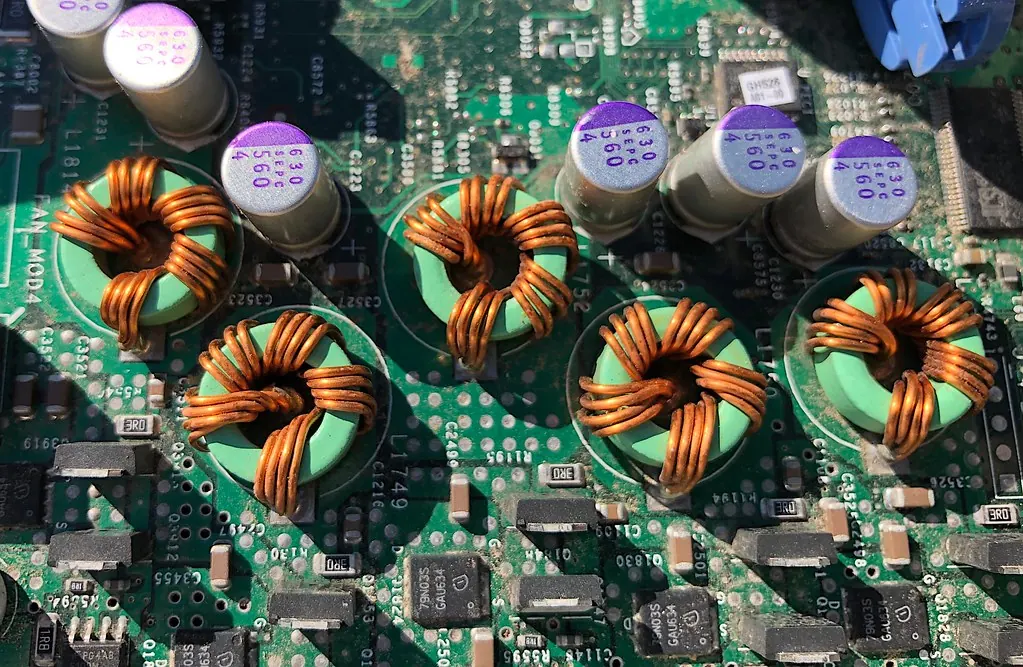
| Power supplies | Pulsed coil supplies, AC/DC converters, fast discharge units, grid interface | High-power electronics, switchgear, reactive power compensation |
| Heating systems | Gyrotrons, RF sources, neutral beam injectors | RF engineering, high-voltage, ion sources |
| Cryogenics | Helium cryoplant, cryolines, cold valves | Process plant, vacuum-jacketed piping |
| Tritium and fuel plant | Isotope separation, detritiation, fuelling pellets | Nuclear-grade process engineering, containment |
| Diagnostics and control | Sensors, data acquisition, real-time plasma control | Instrumentation, software, machine learning |
8.2Quality expectations
- Nuclear-grade quality assurance and traceability
- Materials certified for low activation (e.g. reduced-activation steels)
- Vacuum and leak-tightness qualification
- Codes such as ASME BPVC Section III Division 4 for fusion devices, and RCC-MRx
- Factory acceptance testing with cryogenic or high-voltage trials
- Long design and qualification lead times
Section 09
Research Partnerships and Skills
Fusion progresses through long collaborations between national laboratories, universities, industry and international programmes. Companies can take part well before a plant is ordered.
Ways industry takes part
5- Supplying components to ITER or national devices through open tenders
- Joint R&D projects with research institutes
- Test facilities for magnets, heat flux and materials
- Technology transfer and licensing
- Supply-chain registers kept by fusion programmes
Skills to build
6- Plasma physics and engineering
- Cryogenics and superconductivity
- High-power RF and power electronics
- Remote handling and robotics
- Nuclear safety and tritium handling
- Materials under neutron irradiation
9.1How a supplier usually enters fusion
- 1Map own capabilities against fusion work packages
- 2Register with programme supplier databases and follow tenders
- 3Build quality systems to nuclear-grade expectations
- 4Start with prototypes, mock-ups or test articles
- 5Qualify processes jointly with the research customer
- 6Scale to series supply as projects move to construction
Section 10
Readiness, Safety and Regulation
Regulators are now shaping rules for fusion. Several countries have chosen to regulate fusion devices proportionately to their hazards — chiefly tritium and activated materials — rather than as fission reactors.
01
United States
The regulator decided in 2023 to oversee fusion machines under its by-product material framework rather than the reactor framework.
02
United Kingdom
Legislation in 2023 confirmed that fusion facilities are regulated by health, safety and environment agencies, not as nuclear reactors.
03
International
The IAEA publishes guidance and outlooks on fusion safety and the path to demonstration plants.
04
India
Fusion research sits within the Department of Atomic Energy; a regulatory approach for future fusion plants remains to be set out.
10.1Signals to watch before planning a plant
- Sustained net plasma gain in a magnetic device
- Tritium breeding demonstrated in an integrated blanket
- Materials qualified under fusion-spectrum neutrons
- Availability and maintenance times from remote handling
- Credible cost per MW for a first-of-a-kind plant
- A licensing route agreed by the national regulator
Section 11
BARREL Services for Fusion Energy
BARREL does not build fusion machines. It helps clients understand the field, position their capabilities and connect with the right partners, backed by its network of engineers, manufacturers and advisers.
- Technology briefings for boards and investors
- Supply-chain capability mapping
- Coordination with manufacturers for fusion work packages
- Quality and documentation readiness support
- Tender tracking and bid support
- Partner and research-institute introductions
- Power-electronics and grid-interface studies
- Cryogenics and vacuum system sourcing support
- Technology due diligence for investments
- Long-range generation planning scenarios
- Regulatory and safety landscape reviews
- Skills and training programme coordination
Project desk
Explore fusion energy with BARREL
Clear briefings, sober timelines, practical supply-chain steps.
Whether you are a manufacturer looking at fusion work packages, a research group seeking industrial partners or an investor weighing the field — tell us what you have in mind and we will respond with the next steps.
Project categories
- Tokamak
- Stellarator
- Inertial fusion
- Magnetised target fusion
- Supply chain
- Research collaboration