
- Renewable Generation
- Wind-Solar Hybrid
- Round-the-Clock
- Storage-Backed
Hybrid & Round-the-Clock Power
Wind-Solar Hybrid | RTC | FDRE | Peak Power | BESS | Pumped Storage
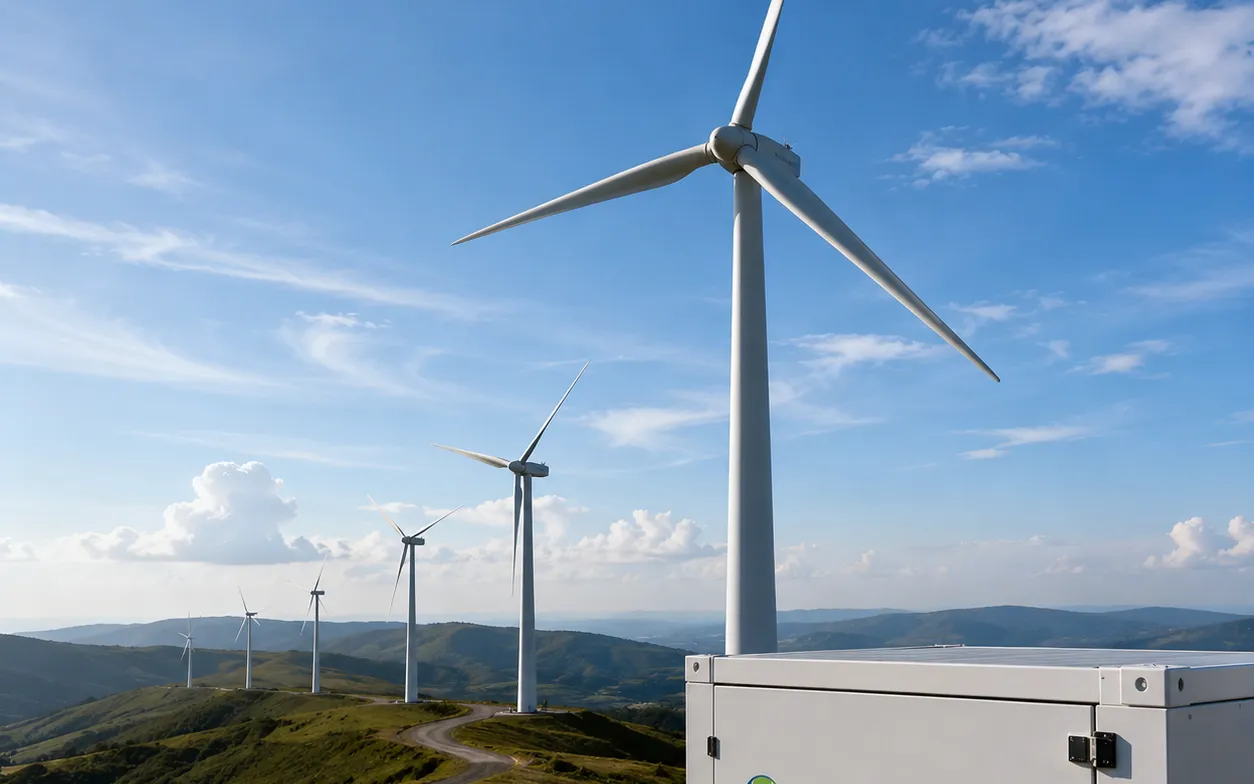
Sun by day, wind by night, storage in between.
Wind and solar rarely peak at the same hour or in the same season. Combined on one connection and backed by batteries or pumped storage, they deliver a steadier, more dispatchable supply than either alone. BARREL provides and coordinates hybrid and round-the-clock projects from resource study and sizing through approvals, connectivity, EPC and long-term operation.
CComplement
Wind and solar profiles that fill each other's gaps
SStore
Battery or pumped storage to shift energy to demand
DDispatch
One controller meeting a firm delivery schedule
- Typical project size
- 50–1,500 MW
- Indicative CUF on connection
- 35–80 %
- Oversizing / DC:AC range
- 1.3–2.0
- Typical storage duration
- 2–6 h
- Grid connection
- 33–400 kV
Section 01
Hybrid and Round-the-Clock Power — Overview
A wind-solar hybrid joins wind turbines and solar PV behind one grid connection, or under one supply contract, so that the shared transmission capacity is used for more hours of the day and year.
Adding storage and a supervisory controller turns the hybrid into a firm product: round-the-clock (RTC) supply, firm and dispatchable renewable energy (FDRE) that follows a demand profile, or assured peak-hour power.
1.1Supply products
| Product | What is delivered | Usual building blocks |
|---|---|---|
| Wind-solar hybrid | Combined energy on one connection, no fixed shape | Wind + PV, sometimes small BESS |
| Round-the-clock (RTC) | Near-flat supply through the day and night | Wind + PV oversized, BESS or pumped storage, sometimes balancing contracts |
| FDRE / load-following | Supply matching a buyer's hourly demand profile | Wind + PV + storage with forecasting and scheduling |
| Assured peak power | Fixed MW in named peak hours (evening, morning) | PV or hybrid with 2–4 h storage |
Product names, minimum availability levels and penalty terms are set by each tender or power purchase agreement; they differ between central agencies, states and private buyers.
1.2Why hybrid and RTC
01
Better use of transmission
Solar and wind share one bay and line; the connection carries power for many more hours.
02
Firmer supply
Complementary profiles plus storage reduce the hours with no renewable output.
03
Replaces conventional baseload
Gives utilities and industry a renewable product that can stand in for part of their thermal contracts.
04
Lower land and grid cost per MWh
Shared roads, substation, control room and O&M crew.
05
Grid friendliness
Storage and plant controllers provide ramp control, frequency response and reactive power.
06
Decarbonised industry
Data centres, steel, cement and green hydrogen need steady clean supply, not daytime peaks.
Section 02
Configurations and Layouts
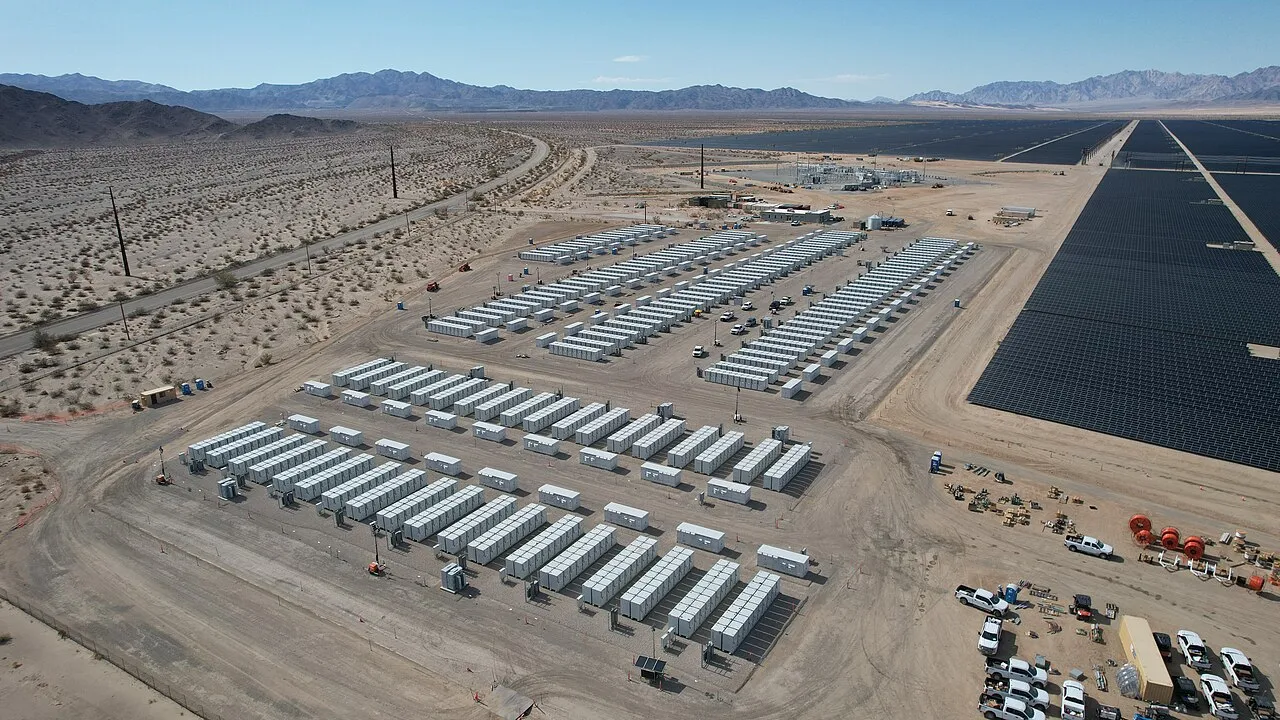
How the wind, solar and storage assets are placed and connected decides cost, losses and the flexibility of operation.
01
One siteCo-located hybrid
Turbines and PV arrays on the same land parcel, sharing internal lines, pooling substation and connection.
02
Two sitesVirtual / distributed hybrid
Wind and solar at different locations, scheduled together under one contract on the same transmission system.
03
FlexibleAC-coupled storage
BESS with its own inverters on the plant AC bus; charges from wind, solar or the grid as rules allow.
04
PV-linkedDC-coupled storage
Batteries on the PV DC side through DC-DC converters; captures clipped solar energy at lower conversion loss.
05
Long durationPumped storage backed
Hybrid capacity contracted with a pumped storage plant for 6–10 h shifting and seasonal firming.
06
PortfolioHybrid with balancing
Shortfalls topped up by exchange purchases or other contracted sources within the PPA rules.
2.1Energy path of an RTC plant
- Wind farm
- Solar PV
- Pooling substation
- BESS / storage
- Plant controller
- Grid connection
- Buyer
Section 03
Resource Complementarity, Oversizing and Energy Yield
The art of a hybrid is in the sizing: how many MW of wind, solar and storage to place behind a given connection so that the supply target is met at the lowest cost per MWh.
3.1Capacity utilisation on the connection
Hybrid CUF
CUF (%) = (Ewind + Esolar − Ecurtailed − Elosses) ÷ (Pconnection × 8,760) × 100
Indicative: wind alone 30–40 %, solar alone 20–28 %, hybrid 40–55 %, with storage and oversizing 60–80 %
Energy is simulated hour by hour (or finer) from site wind and solar data. Oversizing raises energy but increases curtailment when combined output exceeds the connection; the optimum balances both.
| Symbol | Meaning |
|---|---|
| Ewind, Esolar | Annual energy at the delivery point from each source, MWh |
| Ecurtailed | Energy lost when output exceeds the connection or schedule, MWh |
| Elosses | Storage round-trip, transformer and line losses, MWh |
| Pconnection | Contracted or connected capacity, MW |
3.2Studies before sizing
Resource
5- Met mast and LiDAR wind data at hub height
- Satellite and ground solar irradiance (GHI, DNI, temperature)
- Long-term correction with reanalysis data
- Hourly and seasonal profile of each source
- Correlation between wind and solar output
Sizing and simulation
5- Wind : solar : storage ratio optimisation
- DC/AC ratio of the PV blocks (often 1.3–1.5)
- Curtailment and clipping analysis
- Storage MW and MWh against supply shape
- P50 / P90 yield and availability compliance
3.3Typical Indian pattern (indicative)
- Solar peaks at midday and in the dry months
- Wind is strongest in the evening and night and in the south-west monsoon
- Evening peak (18:00–22:00) is the hardest hour to serve
- Storage fills the evening gap and smooths ramps
- Gujarat, Rajasthan, Karnataka, Tamil Nadu, Maharashtra and Andhra Pradesh hold the best combined sites
Section 04
Main Equipment
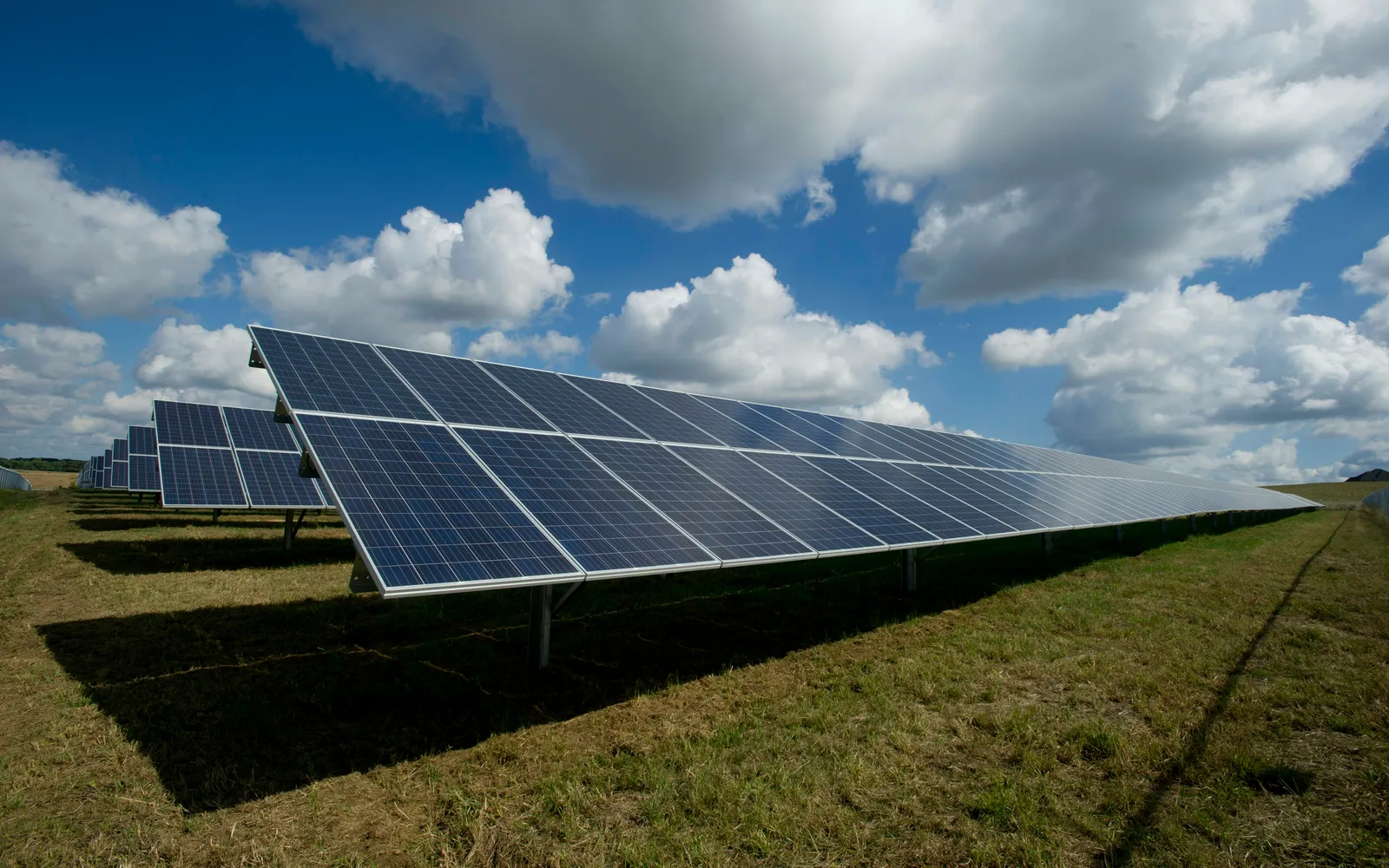
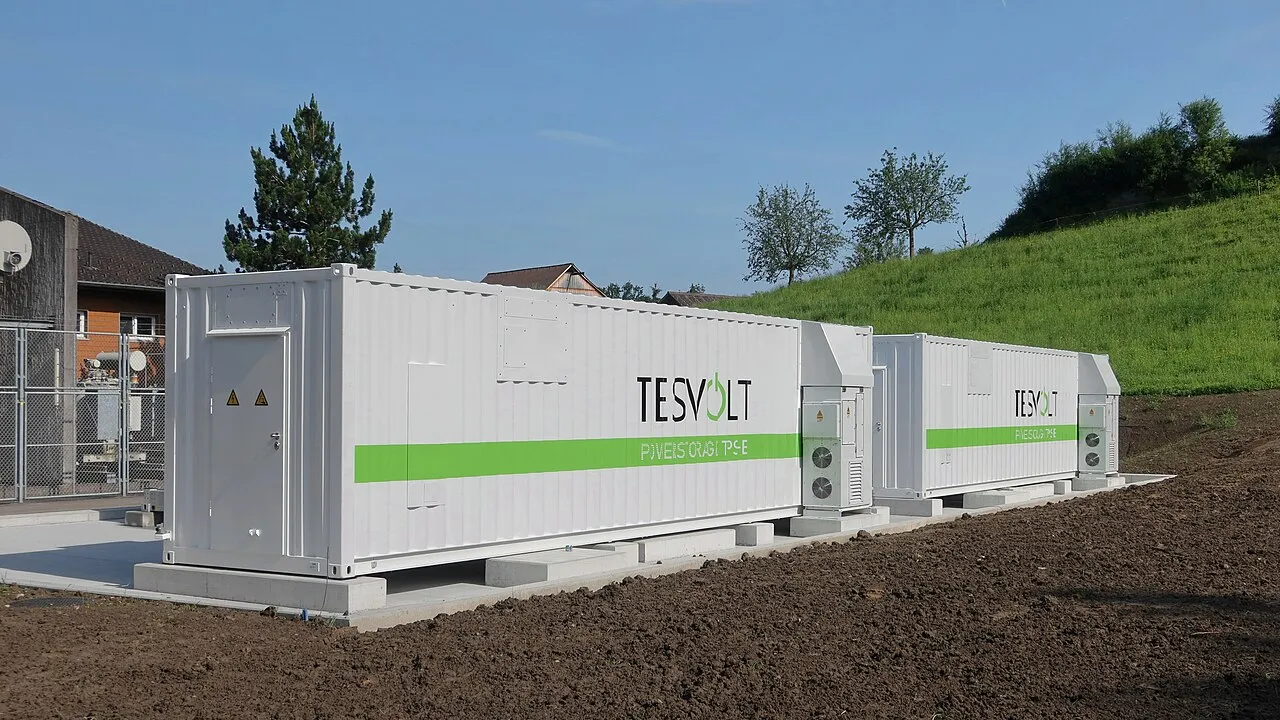
A hybrid uses standard wind, solar and storage equipment; what is special is the shared electrical system and the controller that runs it as one plant.
| Equipment | Role | Selection points |
|---|---|---|
| Wind turbine generators | Evening, night and monsoon energy | Rotor size for low wind speeds, hub height, grid-code capability |
| PV modules and trackers | Daytime energy | Bifacial modules, single-axis trackers for longer generation hours |
| String or central inverters | PV DC to AC | DC/AC ratio, reactive power capability, clipping behaviour |
| Battery energy storage | Shifting, firming, ramp control | LFP chemistry, MW / MWh, cycles per day, augmentation plan |
| Power conversion system | Battery DC to AC | Four-quadrant operation, grid-forming option |
| Pooling substation | Collects 33 kV feeders, steps up | Transformer rating against combined output, harmonic filtering |
| Hybrid power plant controller | Runs the plant as one unit | Schedule tracking, export limit, frequency and voltage control |
4.2Building blocks
Section 05
Dispatch Control and Availability
Firm supply contracts are met in the control room: forecasts, schedules and a controller that decides each minute where every MW goes.

- 1Day-ahead wind and solar forecast with weather models
- 2Storage state-of-charge plan for the next day
- 3Schedule submitted to the load despatch centre
- 4Intraday revisions as forecasts update
- 5Real-time controller balances generation, storage and export limit
- 6Settlement against schedule and deviation rules
- 7Monthly and annual availability reconciliation with the buyer
RTC and FDRE contracts usually require a minimum share of demand to be met over a month or year, with penalties for shortfall. Exact percentages and measuring periods vary by tender and must be read from each PPA.
Section 06
Grid Connection and Connectivity
Large hybrids usually connect to the inter-state transmission system (ISTS) at a pooling station; smaller and captive plants often connect to a state network.
- Connectivity application to the central or state transmission utility
- ISTS access under the current general network access rules
- State intra-state connectivity and open access for captive and group-captive supply
- Bay allocation and dedicated transmission line to the pooling station
- Grid code compliance: fault ride-through, reactive power, frequency response
- Scheduling, forecasting and deviation settlement
- Metering at the interconnection point and telemetry to load despatch
- Power quality and harmonic studies for inverter-based plants
Transmission charge waivers and connectivity rules have changed several times; they are checked against the regulations in force when the project is planned.
Section 07
Project Development and Approvals
A hybrid combines two land banks and two resource cases with one connection and one contract, so development needs careful sequencing.
- 1Site screening for wind and solar resource and land
- 2Resource measurement campaign (wind 12+ months)
- 3Land aggregation, lease or purchase, conversion where needed
- 4Connectivity application and bay reservation
- 5Sizing study and bid or offer preparation
- 6Tender award or bilateral PPA / power supply agreement
- 7State approvals: project registration, wind micro-siting, NOCs
- 8Aviation, defence and forest clearances where they apply
- 9Financial close and EPC award
Section 08
Turnkey EPC Delivery
BARREL coordinates hybrid delivery as one turnkey contract or as separate wind, solar, storage and transmission packages under a single interface manager.
Wind package
4- Micro-siting and foundations
- Crane pads and access roads
- Turbine erection and commissioning
- 33 kV collection feeders
Solar and storage
4- Piling, structures, trackers
- Modules, inverters, cabling
- BESS foundations and containers
- Fire safety and HVAC for BESS
Electrical and control
4- Pooling substation
- Transmission line and bay
- Hybrid plant controller and SCADA
- Grid compliance testing
8.1Typical schedule (300 MW class, indicative)
- Resource & land 12–18 mo
- Approvals & connectivity 6–12 mo
- Construction 18–24 mo
- Phased commissioning 3–6 mo
Section 09
Operation and Maintenance
Three technologies on one site need one O&M plan, one spares strategy and one view of availability against the contract.
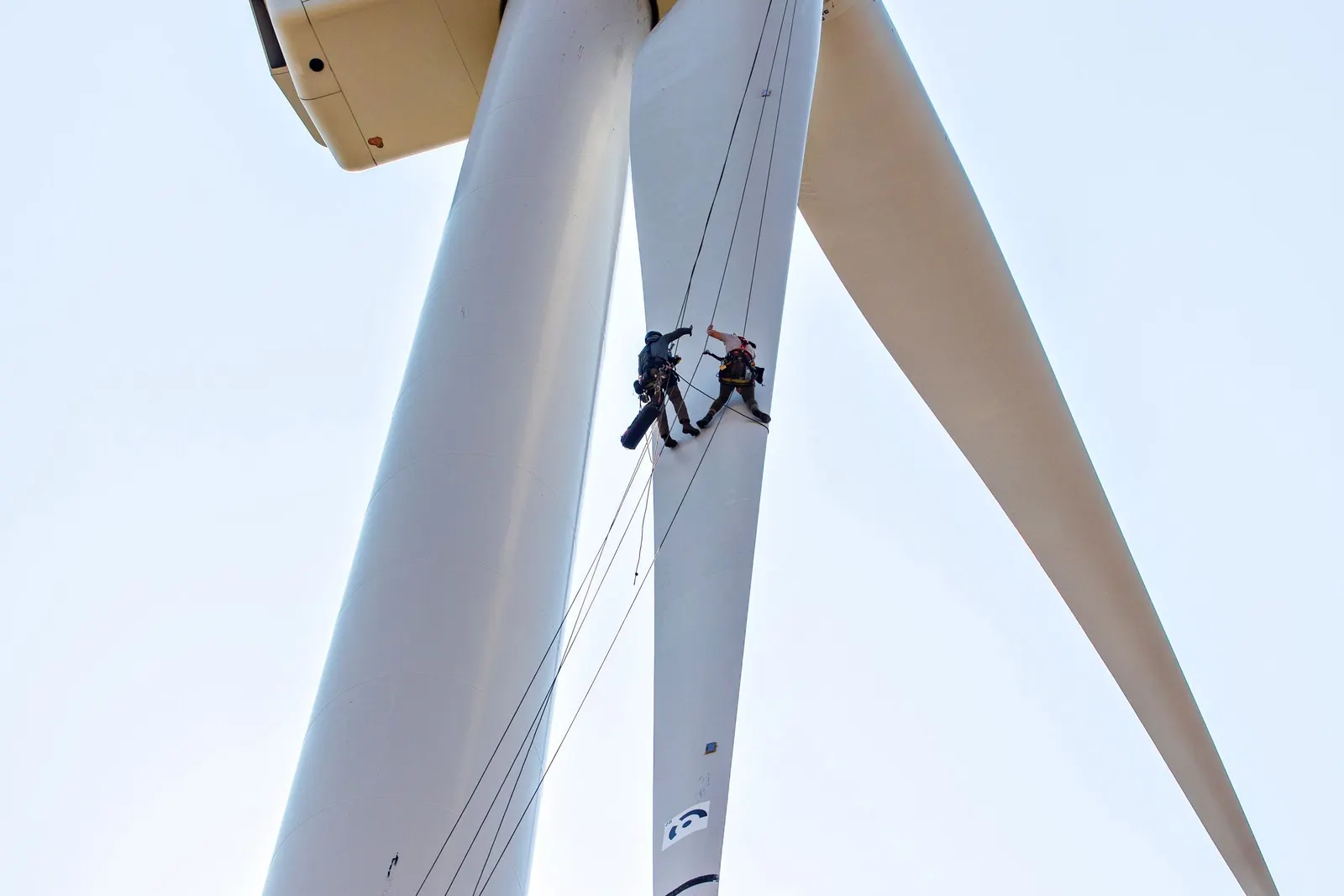
- Turbine scheduled and condition-based maintenance
- Module cleaning and inverter maintenance
- Battery health monitoring, thermal checks and capacity tests
- Storage augmentation to hold contracted MWh
- Substation and line maintenance
- Forecast accuracy tracking and model tuning
- Planned outages timed to low-demand seasons
- Availability and deviation reporting to the buyer
- Spares for blades, gearboxes, inverters and battery modules
Section 10
Finance and Commercial Models
Hybrid and RTC power is sold to central agencies and their distribution company buyers, to states, or directly to industry under captive, group-captive or green open access arrangements.
| Item | Typical range (India, indicative) |
|---|---|
| Wind capital cost | ₹6.5–8 crore per MW |
| Solar PV capital cost | ₹3.5–4.5 crore per MWp |
| Battery storage capital cost | Falling quickly; quoted per MWh and checked at each bid |
| Contract term | Usually 25 years |
| Revenue options | Central or state PPA, captive and group-captive, green open access, exchange sale |
| Key risks | Resource shortfall, curtailment, availability penalties, storage degradation |
Figures are indicative for early screening only; each project needs its own cost estimate, hourly simulation and financial model.
Section 11
Trends and Standards
Hybrids are moving from shared connections to fully firm products, with storage and controls doing more of the work once done by thermal plants.
01
Grid-forming inverters
Storage inverters that set voltage and frequency and provide synthetic inertia.
02
Long-duration storage
Pumped storage and new chemistries for 8 h and longer shifting.
03
Green hydrogen supply
RTC renewable supply to electrolysers needing high utilisation.
04
Market-based dispatch
Storage earning from exchange price spreads and ancillary services alongside the PPA.
10.1Reference standards (examples)
- IEC 61400 (wind turbines)
- IEC 61215 / 61730 (PV modules)
- IEC 62933 (storage systems)
- IEC 62619 (lithium batteries)
- NFPA 855 (storage fire safety)
- CEA technical standards for connectivity
- Indian Electricity Grid Code
Section 12
BARREL Services for Hybrid and RTC Power
One partner that joins wind, solar, storage and the grid into a single delivered product, supported by BARREL's network of consultants, manufacturers and contractors.
- Site screening and land support
- Wind and solar resource assessment
- Hourly sizing and storage optimisation
- Bid and offer support for RTC / FDRE tenders
- Connectivity and open access support
- Owner's engineer and lender's engineer
- Equipment sourcing for WTG, PV and BESS
- Turnkey EPC / EPCM coordination
- Hybrid plant controller and SCADA
- Forecasting and scheduling services
- O&M and availability management
- Project finance facilitation
Project desk
Plan your hybrid or round-the-clock project with BARREL
From the first wind and sun data to firm clean supply.
Bidding for an RTC or FDRE tender, adding storage to an existing plant, or looking for steady renewable supply for your industry — tell us about the site or the demand and we will respond with the next steps.
Project categories
- Co-located wind-solar hybrid
- Virtual hybrid
- Round-the-clock supply
- FDRE / load-following
- Assured peak power
- Storage retrofit