
- Renewable Generation
- Agrivoltaics
- Dual Land Use
- Turnkey EPC
Agrivoltaics — Solar Over Crops
Elevated | Vertical Bifacial | Inter-Row | Trackers | Crops | Farmers
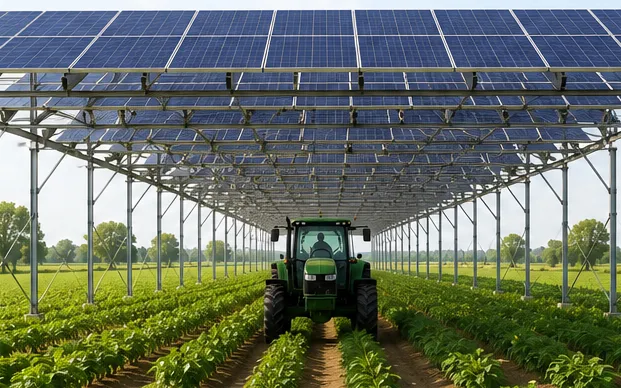
One field, two harvests: food and power.
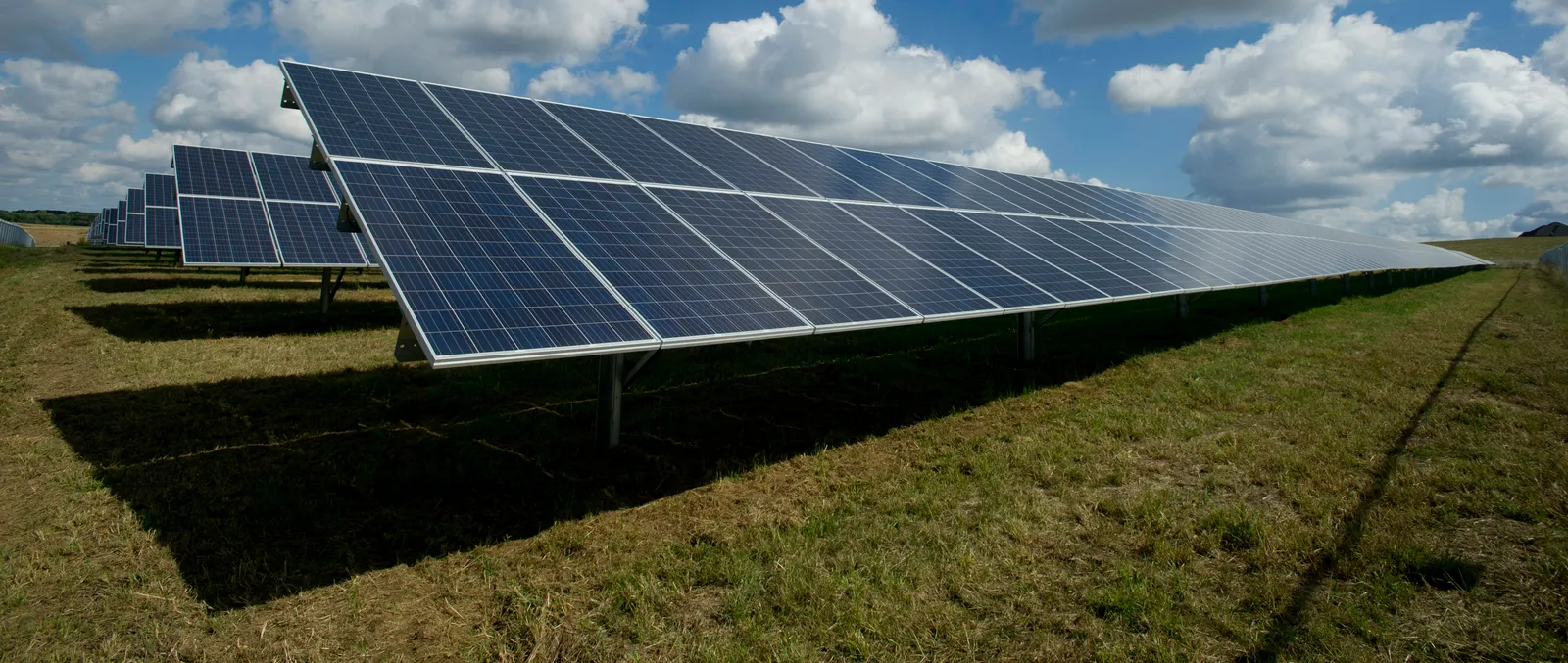
Agrivoltaics places solar modules over or between crops so the same land keeps producing food while it produces electricity. BARREL provides and coordinates agrivoltaic projects from land and crop assessment, structure design and farmer agreements through approvals, construction and grid connection to long-term operation alongside the farming calendar.
LLand
Farming continues under and between the arrays
CCrop
Shade-tolerant crops matched to light levels
PPower
Solar energy sold to grid, feeder or farm
- Typical plant size
- 0.5–50 MW
- Indicative LER
- 1.2–1.6
- Elevated clearance
- 2.5–5 m
- Typical CUF (India)
- 17–22 %
- Asset life
- 25+ yrs
Section 01
Agrivoltaics — Overview
An agrivoltaic plant is designed from the start for two uses of one piece of land: crop or livestock production as the primary use, and solar generation as the second. Modules are raised high enough, or spaced widely enough, for farm work to go on.
In land-scarce, sun-rich countries like India, agrivoltaics lets solar capacity grow without taking farmland out of food production, and gives farmers a steady second income that does not depend on the monsoon.
1.1Why agrivoltaics
01
Dual land use
Food and electricity from the same hectare; total output per hectare is usually higher than either use alone.
02
Farmer income
Lease rent or a share of power revenue gives a fixed income alongside the crop, smoothing bad seasons.
03
Crop protection
Partial shade shields crops from heat stress, hail and heavy rain, and reduces sun-scald on fruit and vegetables.
04
Water saving
Lower soil temperature and wind speed under the modules cut evaporation; module run-off can be harvested.
05
Cooler modules
Transpiring crops below keep the modules a few degrees cooler, which slightly improves their output.
06
Rural grid supply
Plants sited near rural substations and agricultural feeders supply daytime power where it is used.
1.2Agrivoltaics compared with a conventional solar farm
| Aspect | Ground-mounted solar | Agrivoltaic plant |
|---|---|---|
| Primary land use | Electricity | Agriculture (crops or grazing) |
| Module height | 0.5–1.5 m lower edge | 2.5–5 m for elevated, or vertical rows |
| Ground cover ratio | 40–50 % | Often 20–35 % |
| Structure cost | Lower | Higher (taller posts, wider spans) |
| Land status | Often converted to non-agricultural use | Stays agricultural where rules allow |
Section 02
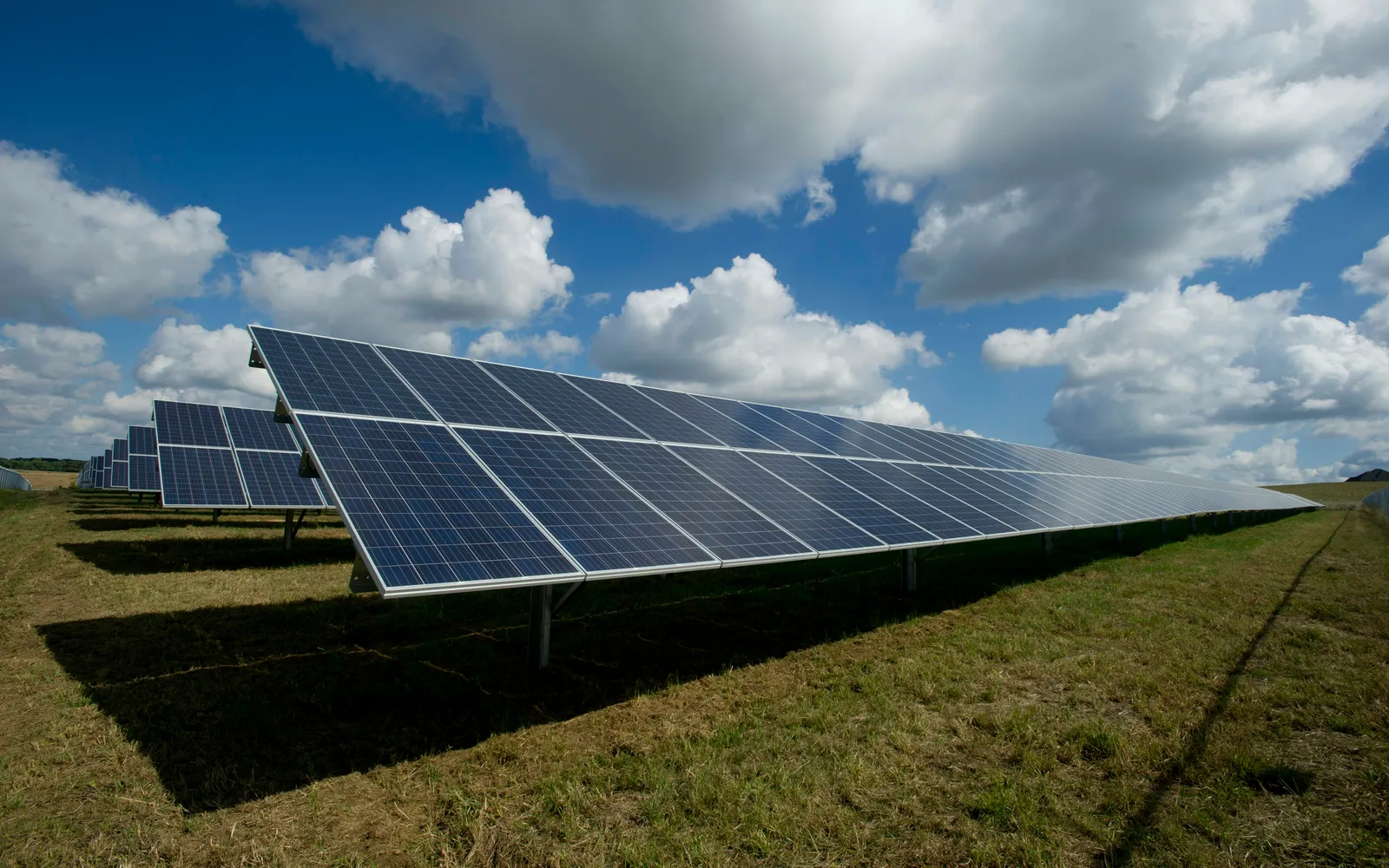
Agrivoltaic System Designs
The structure is chosen from the crop, the machinery the farmer uses and the light the crop needs. Each design trades power density against farm access and shading.
01
CanopyElevated overhead
Modules on a high frame 2.5–5 m above ground; crops grow beneath and machines pass under. Suits horticulture, vegetables and orchards.
02
Fence rowsVertical bifacial
Bifacial modules mounted upright in east-west facing rows 8–12 m apart; morning and evening generation peaks; field strips stay open for tractors.
03
Wide rowsInter-row (interspace)
Conventional-height tilted rows set far apart, with crops grown in the strips between; lowest structure cost.
04
AdjustableSingle-axis trackers
Tracker rows that can be turned to let more light through at critical crop stages, or flat for machinery passes.
05
Light sharingSemi-transparent / spaced modules
Modules with gaps between cells or between panels to spread diffuse light more evenly over the crop.
06
LivestockSolar grazing
Standard or slightly raised arrays with sheep or goats grazing beneath; vegetation is managed by the animals.
2.1Design trade-offs (indicative)
| Design | Power density | Farm access | Relative structure cost |
|---|---|---|---|
| Elevated overhead | Medium–high | Good under the canopy | High |
| Vertical bifacial | Low–medium | Very good in open strips | Medium |
| Inter-row | Medium | Good in strips, none under rows | Low |
| Single-axis trackers | Medium–high | Good when stowed flat | Medium–high |
Section 03
Crop Choice, Shading and Microclimate
Every crop has a light saturation point: above it, more sunlight adds little growth. Crops that saturate early tolerate the partial shade of an agrivoltaic array; crops that need full sun lose yield.
Field trials on the chosen site and crop are the best guide; results vary with climate, season, variety and how much light the design lets through.
3.1Indicative crop suitability under partial shade
Often benefit or stay level
5- Leafy vegetables (spinach, lettuce, fenugreek)
- Tomato, capsicum, chilli in hot climates
- Berries and some fruit nurseries
- Turmeric, ginger
- Medicinal and aromatic herbs
Heat and water stress relief can outweigh lost light.
Moderate tolerance
5- Potato, onion, garlic
- Pulses (moong, urad, chickpea)
- Cabbage, cauliflower
- Fodder grasses
- Grapes and orchards with tall frames
Sensitive to shade
5- Paddy (rice)
- Wheat in cooler seasons
- Maize and sugarcane
- Cotton
- Oilseeds needing full sun
Possible with low ground cover ratio or vertical rows, at some yield cost.
3.2Microclimate effects under the array
- Lower peak soil and air temperature on hot days
- Higher relative humidity near the crop
- Reduced wind speed and evaporation
- Uneven rainfall: drip lines under module edges
- Shade bands move through the day; row orientation matters
- Less frost on clear nights under the canopy
Section 04
Plant Design, Land Equivalent Ratio and Clearances
An agrivoltaic layout balances three things: the crop's light needs, the energy yield, and the space farm machinery needs to work. The land equivalent ratio measures how well the balance has been struck.
4.1Land equivalent ratio (LER)
Combined land productivity
LER = (Ycrop,AV ÷ Ycrop,mono) + (Eelec,AV ÷ Eelec,PV)
Example (indicative): crop 80 % of open-field yield + power 60 % of a dense PV plant → LER = 0.80 + 0.60 = 1.40
An LER above 1 means the shared field produces more than the same land split between farming and a solar farm. Many guidelines also require the crop yield to stay above a minimum share (often around 66 %) of the open-field reference.
| Symbol | Meaning |
|---|---|
| Ycrop,AV | Crop yield per hectare under the agrivoltaic system |
| Ycrop,mono | Crop yield per hectare on a comparable open field |
| Eelec,AV | Annual electricity per hectare from the agrivoltaic plant |
| Eelec,PV | Annual electricity per hectare from a conventional ground-mounted plant |
4.2Mechanisation clearances (indicative)
| Item | Typical design value |
|---|---|
| Clear height under elevated modules | 2.5–3 m for small tractors; 4–5 m for harvesters and orchard equipment |
| Post spacing across the field | Matched to implement width plus margin, often 6–12 m |
| Vertical bifacial row pitch | 8–12 m to allow seeding, spraying and harvesting |
| Headlands at row ends | 8–15 m for turning |
| Cable routing | Buried below plough depth (≥ 0.8–1 m) or along the structure |
4.3Water and soil
Water use
4- Drip or micro-sprinkler lines aligned with module drip edges
- Rainwater harvesting from module run-off into farm ponds
- Module cleaning water reused for irrigation where quality allows
- Soil moisture sensors to tune irrigation under shade
Soil protection
4- Minimal concrete: screw piles or driven posts
- No topsoil stripping or levelling beyond need
- Erosion control along drip lines
- Baseline and periodic soil testing
Section 05
Modules, Structures and Electrical Equipment
Agrivoltaic equipment is largely standard solar equipment, but the structure is taller and stronger and the cabling is laid with farm work in mind.
| Item | Agrivoltaic choice | Notes |
|---|---|---|
| Modules | Bifacial mono-PERC / TOPCon, glass-glass | Bifacial gain from light reflected off crops and soil |
| Structure | Hot-dip galvanised steel, tall posts and long purlins | Wind load at height; corrosion from fertiliser and irrigation spray |
| Foundations | Screw piles, driven posts or small pile caps | Keeps soil workable; easy removal at end of life |
| Inverters | String inverters on the structure or at row ends | Out of the way of machinery |
| Cabling | UV-resistant, rodent-protected, buried or on trays | Marked routes; no loose cable in the field |
| Monitoring | SCADA plus crop and weather sensors | Light, soil moisture and temperature under the array |
Section 06
Grid Connection and Power Use
Agrivoltaic plants are usually small to medium and sit close to rural load, so they connect to 11 or 33 kV feeders or a nearby distribution substation.
- Connection to an 11 kV or 33 kV agricultural feeder or substation
- Feeder-level solarisation supplying daytime farm pumping
- Net or gross metering for farm and co-operative plants
- Captive or group-captive supply to agro-processing units
- Protection, anti-islanding and grid code compliance
- Battery storage for evening loads and cold storage
Many rural feeders are weak; a load-flow and hosting-capacity check is needed before fixing the plant size.
Section 07
Government Schemes and Approvals
In India, the PM-KUSUM scheme supports solar for farmers through decentralised grid-connected plants on farmland, standalone solar pumps and the solarisation of grid-connected pumps and agricultural feeders. Agrivoltaic designs fit well where a plant is built on cultivable land and farming is meant to continue.
Scheme rules, tariffs and eligibility are set by the central and state governments and change over time; each project is checked against the current state guidelines.
- 1Land identification and title check with the farmer or co-operative
- 2Crop and site assessment, preliminary layout
- 3Check of state land-use rules (agricultural status, conversion if needed)
- 4Application under the relevant scheme or tender, or a private PPA
- 5Feasibility and connectivity approval from the distribution company
- 6Land lease or revenue-share agreement with the farmer
- 7Power purchase agreement and financial close
- 8Electrical inspector approval and commissioning
Internationally, countries such as Germany, France, Italy and Japan have specific agrivoltaic rules or standards defining minimum crop yields and maximum land loss; Indian guidelines are still developing.
Section 08
Farmer Partnership Models
An agrivoltaic project lasts 25 years or more, so the agreement with the farmer is as important as the engineering. The model decides who farms, who owns the plant and how income is shared.
01
Fixed rentLand lease
The developer leases the land and pays an annual rent with escalation; the farmer keeps farming under the array.
02
VariableRevenue share
The farmer receives a share of electricity revenue, sometimes with a minimum guaranteed amount.
03
OwnershipFarmer-owned
The farmer or family owns the plant, financed by a loan or scheme support, and sells power to the distribution company.
04
CollectiveCo-operative / FPO
A farmer producer organisation or co-operative pools land and owns or co-owns the plant.
05
HybridDeveloper-farmer partnership
Developer builds and operates; the farmer earns rent plus a crop income supported by agronomy advice.
8.1What a good farmer agreement covers
- Rent or revenue share, escalation and payment dates
- Crop rights and who bears crop risk
- Access for O&M and for farm machinery
- Compensation for crop damage during works
- Insurance of plant and crops
- Decommissioning and land restoration at the end
Section 09
Turnkey EPC Delivery
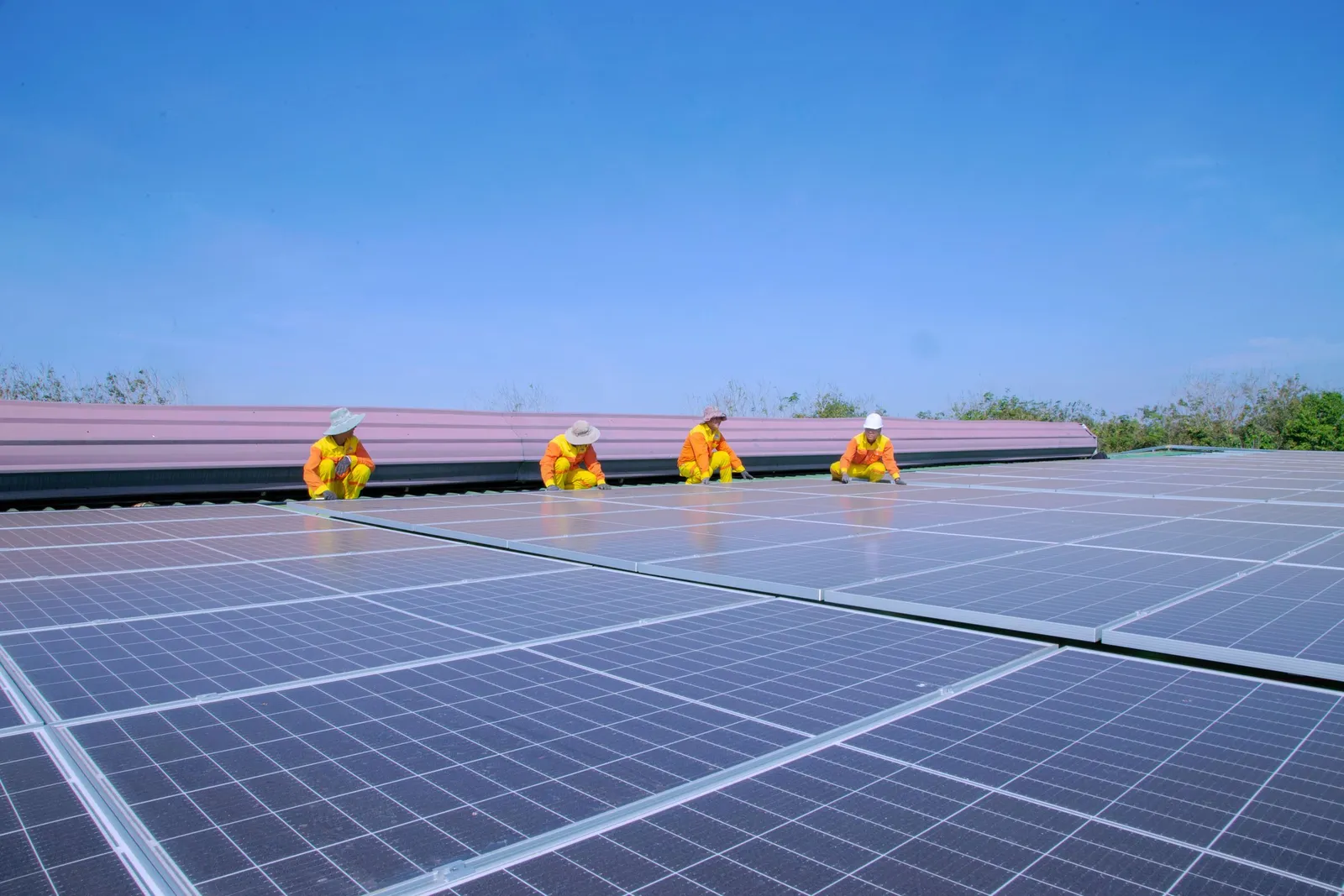
Agrivoltaic construction is planned around the cropping calendar so that sowing and harvest are not disturbed.
Civil and structure
4- Survey and geotechnical tests
- Screw pile or post installation
- Tall structure erection
- Drainage and access tracks
Electrical
4- Module and inverter installation
- Buried cabling at safe depth
- Transformer and switchgear
- Feeder or substation bay
Agri integration
4- Irrigation layout under the array
- Fencing and gates for machinery
- Crop sensors and weather station
- Hand-over to the farmer with a crop plan
9.1Typical schedule (1–10 MW)
- Assessment 1–2 mo
- Design & approvals 3–6 mo
- Construction 4–8 mo
- Commissioning 1 mo
Section 10
Operation and Maintenance
O&M in an agrivoltaic plant is shared between the power operator and the farmer, with an agreed calendar so that cleaning, repairs and farm work do not clash.
- Module cleaning timed with irrigation and spraying
- Inspection of tall structures for corrosion and loosening
- Cable route checks after ploughing seasons
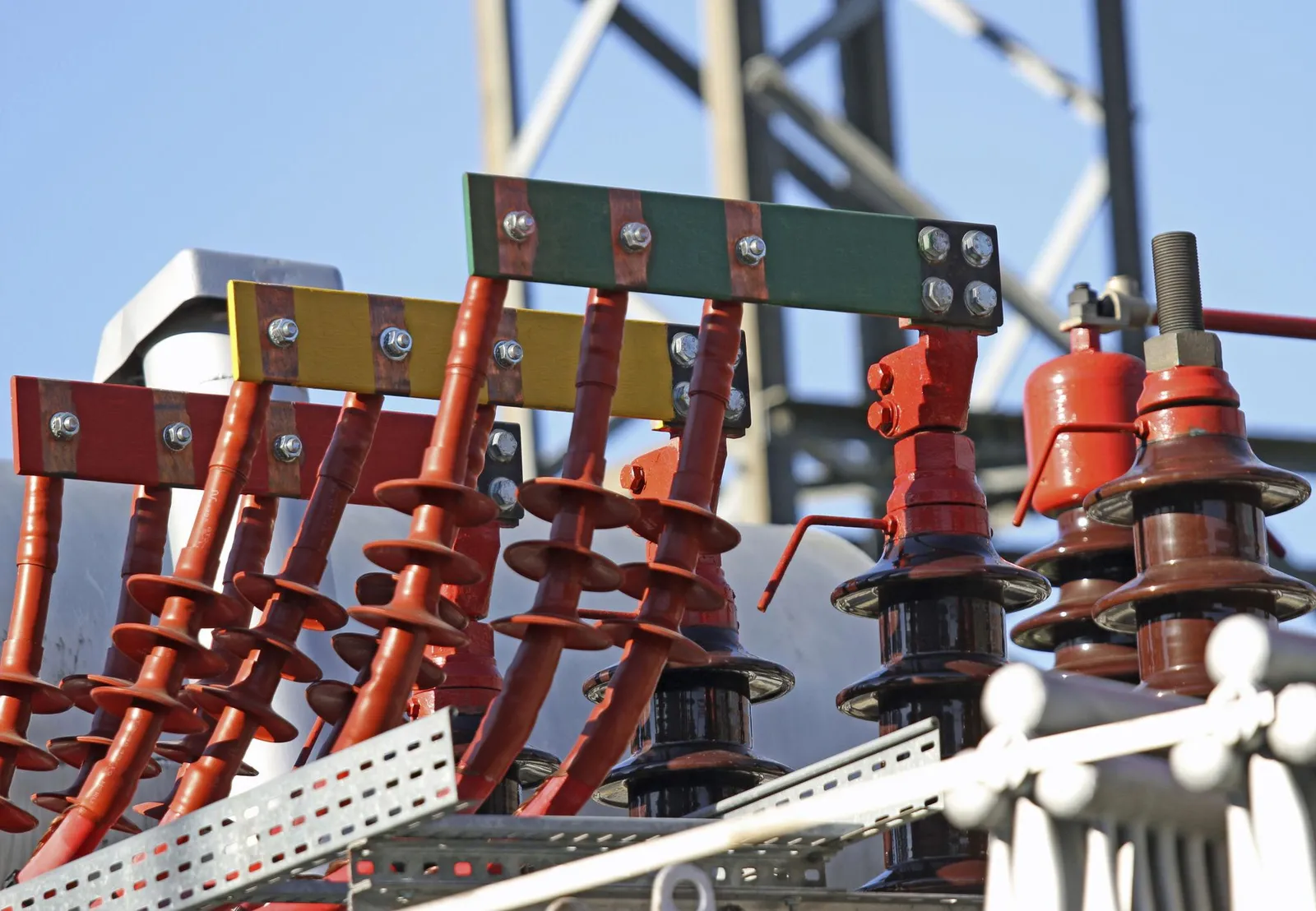
- Inverter and transformer preventive maintenance
- Vegetation and weed management at posts
- Crop and microclimate monitoring
- Tracker stow for machinery passes and storms
- Generation reports shared with the farmer
- Safety training for farm workers near electrical equipment
Section 11
Finance and Commercial Models
Agrivoltaic plants cost more per MW than ground-mounted solar because of taller structures and lower density, but the land stays productive and the farmer gains a second income.
| Item | Typical range (India, indicative) |
|---|---|
| Capital cost | 10–30 % above a comparable ground-mounted plant |
| Land need | About 1.5–2.5 times the area per MW of a dense solar farm |
| Capacity utilisation factor | 17–22 % depending on design and location |
| Revenue options | Scheme or DISCOM PPA, open access, captive, net metering |
| Farmer income | Lease rent or revenue share plus crop income |
Figures are indicative for early screening only; each project needs its own cost estimate, crop study and financial model.
Section 12
BARREL Services for Agrivoltaics
BARREL coordinates engineers, agronomists, manufacturers, contractors and financiers so that farmers and developers have one partner for both the power and the farm side.
- Land and crop suitability assessment
- Shading and energy yield modelling
- Structure design for farm machinery
- Scheme and approvals support
- Farmer and co-operative agreements
- Owner's engineer and lender's engineer
- Module, structure and inverter sourcing
- Turnkey EPC / EPCM
- Grid connectivity and PPA support
- Project finance facilitation
- O&M with crop monitoring
- Agronomy partner coordination
Project desk
Build your agrivoltaic project with BARREL
Keep the field farming while it powers the grid.
A farmer, co-operative, developer or agro-business looking at solar over farmland — tell us about the land, the crops and the grid nearby, and we will respond with the next steps.
Project categories
- Elevated overhead
- Vertical bifacial
- Inter-row
- Tracker agri-PV
- Solar grazing
- Farm pump / feeder solar