
Distribution · MV, LV and smart networks
Delivering reliable electricity to every connection.
Distribution is the final and most extensive stage of power delivery — from medium-voltage substations and feeders to the transformer at the end of the street, the meter on the wall, and the rooftop solar, batteries and EV chargers now feeding power back.
- AC covered
- 100 V–132 kV
- DC covered
- 12–3,000 V
- Areas
- 10
Network architecture
Primary, secondary, service — and six ways to wire them.
01Primary distribution
Receives power at 33, 22 or 11 kV and feeds secondary substations and large consumers through MV feeders.
02Secondary distribution
MV/LV transformers deliver three- and single-phase power to homes, shops and small industry.
03Service connection
Service cable, cut-out, meter, main breaker and earthing — the handover to the consumer's installation.
Radial
Single source per feeder — simple and economical; rural and suburban.
Ring main
Feeders in a loop with a normally open point; urban and industrial.
Interconnected
Multiple substations and feeders tied together for redundancy.
Network
Primary feeders supply meshed secondary networks; needs network protectors.
Spot network
Several transformers on one LV bus — hospitals, high-rise, critical loads.
Microgrid
Local generation, storage and loads, grid-connected or islanded.
Technology explorer
From the substation to the meter, in depth.
Distribution · 01
Distribution Substations
The nodes between sub-transmission and the consumer network.
Primary substations feed MV networks; secondary substations step MV down to LV. A ratio such as 33/11 kV is stored as two values, not one voltage.
By transformation
- 132/33 and 110/33 kV
- 66/33 and 66/11 kV
- 33/22 and 33/11 kV
- 22/11 and 20/11 kV
- 11/6.6 and 11/3.3 kV
- 11 kV/433, 415, 400, 230 V
- 33 kV/415 V and 33 kV/690 V
By construction
- Outdoor and indoor AIS
- Metal-clad
- GIS and hybrid
- Compact, package, prefabricated
- Containerised and skid-mounted
- Pole-, ground- and pad-mounted
- Underground and mobile
- Smart digital
By application
- Urban, rural, township
- Industrial and commercial
- Hospitals, airports, ports
- Railway and metro traction
- Mining and data centres
- Solar pooling and wind collection
- BESS and EV charging hubs
- Agricultural feeders
Primary equipment
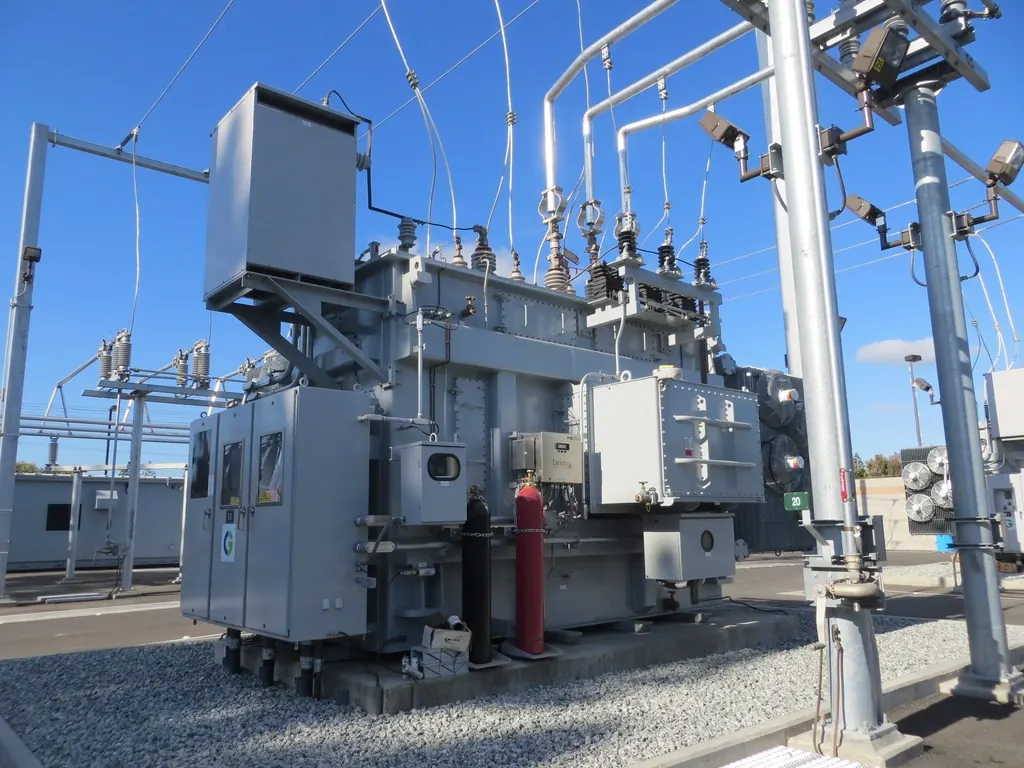
- Power and distribution transformers
- Switchgear and breakers
- Load break switches and disconnectors
- Ring Main Units
- CT, VT, PT
- Surge arresters
- Capacitor banks and voltage regulators
- Earthing transformers
Secondary equipment
- Protection relays and C&R panels
- Metering panels
- RTUs, PLCs, IEDs
- Communication gateways
- Battery banks, chargers, UPS
- Fire alarm, CCTV, access control
Civil
- Transformer and switchgear foundations
- Control room
- Cable trenches and ducts
- Earthing grid
- Oil pit and fire wall
- Drainage, roads, compound wall
Distribution · 02
MV Lines & Feeders
Medium-voltage feeders carry power to towns, villages and industry.
Radial, ring main and interconnected feeders, overhead or underground, sized for demand, voltage drop and protection.
Voltages
- 3.3, 6.6 kV
- 10, 11, 12 kV
- 13.2, 13.8, 15 kV
- 20, 22, 23 kV
- 24.9, 27.6 kV
- 30, 33, 34.5, 35 kV
Construction
- Bare and covered conductor
- Aerial bundled conductor (ABC)
- Spacer cable and tree-wire
- Single-pole and H-pole
- Concrete, steel tubular, wooden poles
- Overhead-to-underground transitions
Conductors & cables
- AAC, AAAC, ACSR, ACAR
- XLPE and EPR cables
- PILC legacy
- Copper and aluminium
- Screened, armoured, concentric neutral
- Fire-resistant
Line accessories
- Pin, post, disc, polymer insulators
- Cross arms and brackets
- Clamps, connectors, jumpers
- Joints and terminations
- Drop-out fuses and AB switches
- Reclosers and sectionalisers
- Anti-climbing and bird protection
Feeder types
- Industrial, agricultural, residential
- Urban and rural
- Express and mixed-load
- Renewable and EV feeders
- Critical-load and traction
- Ring main and interconnected
Feeder engineering
- Route survey and load estimate
- Load flow and voltage drop
- Short-circuit and protection coordination
- Loss and power factor
- Reliability and reconfiguration
- Pole design and earthing
- GIS mapping and RoW
Distribution · 03
LV Networks & Connections
The last mile — from the transformer to every consumer.
Overhead, underground and ABC networks with distribution boards, protection and the consumer service connection.
Network types
- Overhead and underground LV
- ABC networks
- 3-phase 4-wire, 1-phase 2-wire
- Urban, rural, industrial, commercial
- Dedicated consumer networks
Conductors & cables
- AAC, AAAC, ACSR
- Aluminium and copper ABC
- XLPE, PVC, LSZH
- Armoured and flexible
- Service entrance cables
- Solar DC and battery cables
Boards & panels
- MDB, SMDB, FDB
- MCC and PCC
- ATS and synchronisation panels
- APFC and capacitor panels
- Feeder pillars
- Street-light panels
- Busbar trunking and rising mains
Protection
- MCB, MCCB, ACB
- RCCB, RCBO, ELCB
- HRC fuses and fuse switches
- Surge protection
- Over/undervoltage relays
- Arc fault protection
- Motor and thermal overload
Service connection
- Single- and three-phase services
- Overhead drop or underground cable
- Meter box and cut-out
- Metering CT
- Prepaid, smart, net and bidirectional meters
- Main isolator and consumer board
- Earthing and bonding
Distribution · 04
Distribution Transformers
Among the most important products in the whole distribution ecosystem.
Every rating and ratio is a configurable record — BARREL does not limit manufacturers to a fixed list.
Construction
- Mineral oil, natural and synthetic ester
- Dry-type, cast-resin, VPI
- Hermetically sealed and conservator
- Pole-, pad-, ground-mounted
- Underground and compact
- Smart transformers
Capacity classes (kVA)
- 5, 10, 16, 25
- 40, 50, 63, 75
- 100, 125, 160, 200
- 250, 315, 400, 500
- 630, 750, 800, 1,000
- 1,250, 1,500, 1,600, 2,000
- 2,500, 3,150, 4,000, 5,000
Voltage ratios
- 33/11 and 22/11 kV
- 20 kV/400 V
- 11 kV/433, 415, 400, 230 V
- 6.6 kV/433, 415, 690 V
- 3.3 kV/415 and 690 V
- 33 kV/690 and 415 V
- 13.8 and 12.47 kV/480 V
Parameters
- kVA, voltages, phases, frequency
- Vector group (e.g. Dyn11)
- Copper or aluminium winding
- CRGO or amorphous core
- Cooling (ONAN …)
- Impedance, no-load and load losses
- Tap changer and range
- Efficiency class and standard
Accessories
- Conservator and Buchholz relay
- Pressure relief device
- OTI, WTI, MOG
- Silica gel breather
- Radiators and fans
- Bushings and terminals
- Valves and marshalling box
- Online monitoring sensors
Distribution · 05
Switchgear, RMU & Protection
Switching and protecting the network, feeder by feeder.
Ring Main Units, breakers and pole-top devices that sectionalise faults and restore supply.
RMU technology
- SF₆ and SF₆-free
- Air- and solid-insulated
- VCB, LBS and fuse-switch RMUs
- Modular and compact
- Smart and remote-controlled
- Indoor and outdoor
RMU arrangements
- 2- to 6-way
- Switch-switch-fuse
- Switch-switch-breaker
- Breaker-breaker
- Extensible busbar
- Transformer feeder
Other switching
- Load break and air break switches
- Gang-operated switches
- Isolators
- Reclosers and auto-reclosers
- Sectionalisers
- Pole-mounted breakers
- Drop-out fuses and fuse cut-outs
- Network protectors
- Automatic transfer switches
Distribution · 06
Smart Grid & Metering
From a passive network to an actively monitored and controlled one.
Sensors, automated switches, smart meters and digital control let operators find faults, restore supply and coordinate distributed resources.
Distribution automation
- Feeder and substation automation
- FLISR — fault location, isolation, restoration
- Remote-controlled switches
- Volt/VAR control
- Automatic capacitor switching
- DT monitoring
- Outage management
Digital systems
- SCADA
- DMS and ADMS
- OMS
- DERMS
- GIS
- MDMS and CIS
- Asset and work management
- Digital twin
- AI predictive maintenance
- Cybersecurity
Meters
- Electronic static meters
- Single- and three-phase
- CT-operated and direct-connected
- Smart prepaid and postpaid
- Net and bidirectional
- Time-of-use and demand
- Power quality meters
AMI & communication
- RF mesh and Wi-SUN
- Cellular 4G/5G and NB-IoT
- LoRaWAN
- Power line communication
- Fibre
- Data concentrators
- Head-end systems
- IoT feeder and transformer sensors
Distribution · 07
Distributed Energy & Microgrids
The network is becoming bidirectional.
Rooftop solar, batteries and EVs turn consumers into prosumers — power is now generated, stored, used and exchanged locally.
Distributed generation
- Residential, commercial, industrial rooftop solar
- Ground-mounted distributed solar
- Small wind and small hydro
- Biomass and biogas
- Diesel and gas gensets
- Fuel cells and CHP
- Community generation
Distribution-connected storage
- Residential and commercial batteries
- Industrial BESS
- Community batteries
- Substation BESS
- Behind-the-meter
- V2G, V2B, V2H
EV charging
- Residential and commercial chargers
- Public AC and DC fast
- High-power charging
- Bus and truck depots
- Highway corridors
- Battery swapping
- Charging substations and transformers
- Smart charging and load management
Microgrids
- Grid-connected and islanded
- Rural, industrial, campus
- Hospital and data centre
- Port and defence, where authorised
- Solar-battery and hybrid
- Peer-to-peer energy
Active networks
- Bidirectional power flow
- Demand response
- Dynamic pricing
- Virtual power plants
- Local energy markets
- Grid-forming and smart inverters
- Distribution ancillary services
Distribution · 08
Power Quality & Losses
Delivering the right voltage — and every unit paid for.
Technical losses are physics; commercial losses are metering, billing and theft. Both are measured and reduced.
Voltage regulation
- OLTC and off-circuit tap changers
- Line and step voltage regulators
- AVR
- D-STATCOM and DVR
- Capacitor banks and shunt reactors
- Smart inverter control
Reactive power & harmonics
- Fixed, automatic, switched capacitors
- Pole-mounted capacitor banks
- Detuned banks
- Active and passive filters
- APFC panels
Technical losses
- Conductor losses
- Transformer copper and core losses
- Joint and connection losses
- Unbalance and reactive losses
- Leakage
Commercial losses
- Meter tampering and theft
- Meter inaccuracy
- Unmetered consumption
- Billing and collection gaps
- Unauthorised connections
Loss reduction
- Feeder segregation
- HVDS
- ABC conversion
- Underground cabling
- Smart, feeder and DT metering
- Energy audit
- Load balancing
- AI theft detection
Power quality monitoring
- Sag, swell, interruption
- Harmonics and THD
- Flicker and transients
- Frequency and unbalance
- Neutral current
- PQ analysers
Distribution · 09
Specialised Distribution
Distribution is not one uniform network.
Each consumer group needs its own configuration — and traction supply is a specialist class of its own.
Rural
- Village electrification
- Agricultural feeders
- Long radial feeders
- SWER where permitted
- HVDS
- Solar village networks and mini-grids
Urban
- Underground MV/LV
- Ring main systems
- Compact and pad-mounted substations
- Network protectors and secondary grids
- Cable tunnels and chambers
- Smart street lighting
Industrial
- Receiving substations
- Captive power distribution
- Dedicated feeders
- MCC, PCC, VFDs
- Harmonic filters and PFC
- Redundant and emergency supply
- Industrial microgrids
Commercial & institutional
- Malls, offices, IT parks
- Hospitals and hotels
- Airports and stations
- Universities and government
- Data centres
- Ports, warehouses, cold storage
Railway & metro
- Traction and auxiliary substations
- 25 kV AC traction interfaces
- 750 V and 1,500 V DC metro
- 3,000 V DC railway
- Depot and station power
- Regenerative braking interfaces
Distribution · 10
Engineering & Design
Engineering as a standalone knowledge and service category.
From demand forecasts to protection settings and the digital map of every pole.
Planning
- Demand forecast and load survey
- Feeder and substation location
- Transformer capacity planning
- Rural and urban network plans
- DG and EV load studies
- Reliability and loss assessment
Electrical
- SLDs and feeder layouts
- Load flow and short-circuit
- Voltage drop
- Conductor, cable, transformer sizing
- Protection coordination
- Earthing
- Harmonics and PFC
- Automation architecture
Civil & structural
- Pole foundations and loading
- Cable trench and duct banks
- Cable chambers
- Equipment foundations
- Road crossings and reinstatement
- Utility coordination
Protection & control
- Feeder and transformer protection
- Overcurrent and earth fault
- Recloser, fuse, sectionaliser coordination
- LV coordination
- Arc flash
- Cybersecurity design
GIS & digital
- Asset, pole, transformer mapping
- Feeder and cable routes
- Consumer indexing
- GPS, drone, LiDAR surveys
- Connectivity models
- Digital twins
Global distribution voltages
33 kV is distribution here, sub-transmission there.
Voltages are classified by value and by network function. Public supply, industrial utilisation and equipment rated voltages are kept apart; dashed values are equipment classes, not network voltages.
Low voltage (AC)
- 100–133 V
- Single-phase — Japan, North America, Brazil
- 200–208 V
- Japan; North American commercial three-phase
- 220 / 230 / 240 V
- Single-phase — India, IEC systems, UK, Australia
- 277 V
- North American commercial lighting
- 380 / 400 / 415 V
- Three-phase four-wire — IEC systems, India
- 440–480 V
- Industrial and North American three-phase
- 500–600 V
- Industrial; Canada
- 690 V
- Industrial motors and renewables
- 1,000 V
- LV upper range, special applications
Medium voltage (AC, kV)
- 1.1
- 2.4
- 3.3
- 4.16
- 6
- 6.6
- 10
- 11
- 12
- 12.47
- 13.2
- 13.8
- 15
- 20
- 22
- 22.9
- 23
- 24.9
- 25
- 27.6
- 30
- 33
- 34.5
- 35
HV distribution & sub-transmission (kV)
- 44
- 45
- 46
- 50
- 55
- 60
- 63
- 66
- 69
- 72.5
- 88
- 90
- 100
- 110
- 115
- 120
- 123
- 132
- 138
- 145
DC distribution
- 12 / 24 / 48 V
- Controls, telecom, battery circuits
- 110 / 125 / 220 V
- Substation protection and control
- 380 / 400 V
- Data centres and DC distribution pilots
- 600 / 750 V
- Metro traction
- 1,000 / 1,500 V
- Solar PV, BESS, metro
- 3,000 V and above
- Railway and special industrial
Country examples
A starting taxonomy — verified with each utility, regulator and grid code.
- India
- 230/400 V, 11, 22, 33, 66, 110/132 kV
- USA
- 120/240 V, 208Y/120, 480Y/277 V; 4.16, 12.47, 13.2, 24.9, 34.5, 69 kV
- Canada
- 120/240, 347/600 V; 4.16, 12.47, 25, 27.6, 34.5 kV
- UK
- 230/400 V, 11, 33, 66, 132 kV
- Germany
- 230/400 V, 10, 20, 30, 110 kV
- France
- 230/400 V, 15, 20, 63, 90 kV
- Japan
- 100/200 V, 6.6, 22, 33, 66, 77 kV
- China
- 220/380 V, 10, 20, 35, 66, 110 kV
- Australia
- 230/400 V, 11, 22, 33, 66, 132 kV
- South Africa
- 230/400 V, 6.6, 11, 22, 33, 44, 66, 132 kV
- Gulf
- 230/400 V, 11, 33, 66, 132 kV
- Brazil
- 127/220, 220/380 V; 13.8, 23, 34.5, 69, 138 kV
Read the numbers right
A feeder is more than its voltage.
S = √3 × VLL × I · P = S × PF
The same current carries more power at a higher voltage — but real feeder capacity also depends on thermal rating, permissible voltage drop, protection, fault level, losses and operating conditions. BARREL records both the calculated capability and the utility-approved limit.
Reliability & performance
How networks are measured.
- SAIDI
- System average interruption duration
- SAIFI
- System average interruption frequency
- CAIDI
- Customer average interruption duration
- CAIFI
- Customer average interruption frequency
- MAIFI
- Momentary interruption frequency
- ASAI
- Average service availability
- AT&C losses
- Aggregate technical and commercial losses
- DT failure rate
- Distribution transformer failures
Manufacturing ecosystem
From aluminium rod to smart meter.
- Transformers
- Single- and three-phase, dry-type, oil-filled
- Poles
- RCC, PSC, steel tubular, spun concrete, composite
- Conductors
- AAC, AAAC, ACSR, covered, ABC
- Cables
- MV and LV, XLPE, PVC, EPR, armoured
- Insulators & hardware
- Porcelain, glass, polymer; clamps, cross arms, connectors
- Switchgear & protection
- VCB, LBS, RMU, ACB, MCCB, MCB; reclosers, relays, fuses
- Panels & busbars
- MDB, SMDB, PCC, MCC, feeder pillars; busduct and trunking
- Meters & AMI
- Smart, prepaid, net meters; modules, concentrators, head-ends
- Capacitors & earthing
- LV/MV capacitors, APFC; earth rods, strips, electrodes
- Automation & smart grid
- RTUs, PLCs, IEDs, gateways, sensors
- Lighting & EV
- Street lights and smart lighting; chargers and power modules
- Test equipment
- Cable testers, relay testers, meter benches, transformer sets
Distribution transformer — process
- Electrical steel
- Core cutting and stacking
- Winding
- Core-coil assembly
- Tank and radiators
- Oil filling under vacuum
- Factory testing
Conductor — process
- Aluminium rod
- Wire drawing
- Annealing
- Stranding
- Compaction
- Inspection and testing
Cable — process
- Drawing and stranding
- Insulation extrusion
- Screening
- Armouring
- Sheathing
- Testing and drum packing
Pole — process
- Steel fabrication or concrete
- Moulds and reinforcement
- Spinning and curing
- Galvanising
- Dimensional and mechanical tests
Conductors & metals
- Aluminium and alloys
- Copper
- Steel and zinc
- Brass and tin
- Silver contacts
Transformers
- CRGO and amorphous cores
- Copper and aluminium winding wire
- Paper and pressboard
- Mineral and ester oils
- Tank and radiator steel
Cables
- Copper and aluminium rod
- XLPE, PVC, EPR, PE compounds
- Semiconductive compounds
- Armour wire
- LSZH and fire-retardant compounds
Civil & electronics
- Cement, aggregates, rebar
- HDPE pipes and PVC ducts
- FRP
- Semiconductors and metering ICs
- Sensors, PCBs, antennas
BARREL manufactures through OEM partners — T&D equipment.
EPC work packages
Sixteen packages, each measurable.
- 01Survey and route alignment
- 02Network design
- 03Substation civil works
- 04Substation equipment supply
- 05Substation installation
- 06MV overhead lines
- 07MV underground cables
- 08LV overhead network
- 09LV underground network
- 10Distribution transformers
- 11RMU and switching
- 12Consumer service connections
- 13Smart metering and AMI
- 14SCADA and automation
- 15Testing and commissioning
- 16O&M and asset handover
Every standard BOQ splits supply, erection, civil, testing, commissioning, logistics and taxes.
Testing & commissioning
Tested at the factory and on site.
- Distribution transformer
- Winding resistance, ratio, vector group, IR, no-load and load losses, impedance, dielectric, temperature rise, oil
- Cable
- Conductor resistance, IR, HV withstand, PD and tan delta where applicable, sheath, continuity, phasing
- Switchgear & protection
- Breaker timing, contact resistance, primary and secondary injection, trip circuits, interlocks, recloser operation
- Meter
- Accuracy, starting current, no-load, voltage and frequency variation, communication, tamper, TOU, prepaid, bidirectional
- Commissioning
- Earthing, phase sequence, energisation, protection checks, voltage profile, SCADA, GIS as-built
Standards & regulation
IEC, IEEE and BIS — edition by edition.
- IEC 60038 · Standard voltages
- IEC 60076 · Power transformers
- IEC 60502 · Extruded power cables
- IEC 60947 / 61439 · LV switchgear and assemblies
- IEC 62271 · HV switchgear and controlgear
- IEC 61850 · Utility automation
- IEC 60898 / 61008 / 61009 · MCBs and RCDs
- IEC 62053 / 62056 · Metering and data exchange
- IEC 60364 · LV installations
- IEC 61000 · EMC
- IEEE 1366 · Reliability indices
- IEEE 1547 · DER interconnection
- IEEE 519 · Harmonic control
- IS 1180 · Distribution transformers (India)
- IS 3043 · Earthing practice
- IS 7098 / IS 694 · XLPE and PVC cables
For India: CEA regulations, CERC and SERC orders, BIS standards, DISCOM specifications and state supply codes.
Research & future distribution
Every technology, its maturity.
- Commercially established
- Commercially available
- Early commercial
- Demonstration
- Prototype
- Research
- Concept
- AI-enabled networks
- Fully digital substations
- Autonomous feeder switching
- Self-healing grids
- Solid-state transformers
- MVDC distribution
- LVDC buildings and campuses
- Grid-forming inverters
- Real-time digital twins
- Predictive transformer maintenance
- Peer-to-peer trading
- Virtual power plants
- Vehicle-to-grid
- Community storage
- AI theft detection
- Superconducting cables
- Cybersecure grid edge
Reference sources
One energy ecosystem
Distribution connects everything to the consumer.
- GenerationReceives and delivers power from central and distributed generation.
- StorageBatteries support local networks, peaks and reliability.
- TransmissionTransmission substations supply the incoming bulk power.
One manufacturer, product or contractor is recorded once and linked to Generation, Storage, Transmission and Distribution — a transformer maker serves all three grids; a cable maker serves all four.
Distribution enquiry
Building, upgrading or supplying a distribution network?
Substations, feeders, transformers, smart metering, loss reduction or a microgrid — tell us the scope and BARREL replies with the next step.