
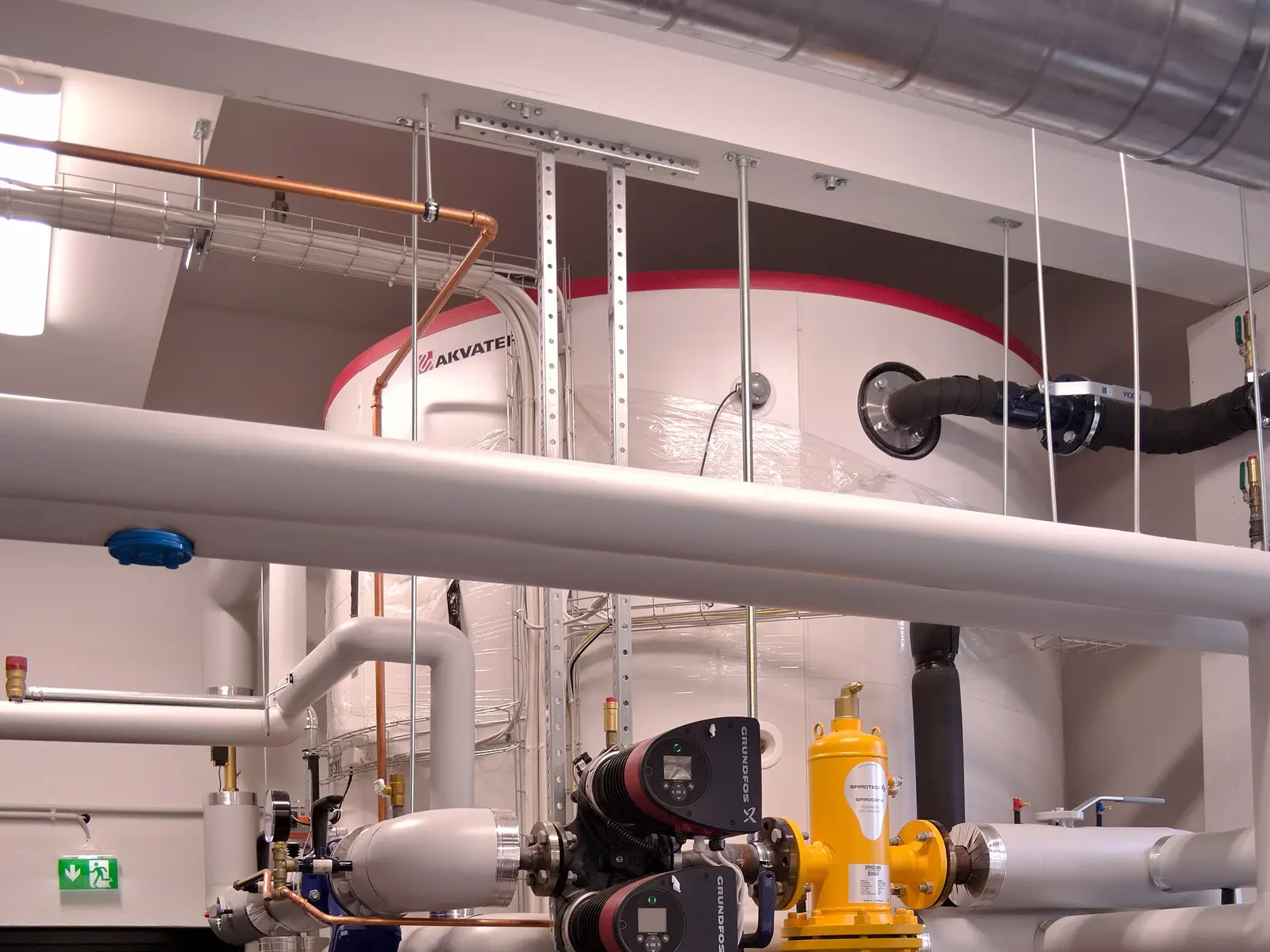
Stored energy is Q = m · cp · ΔT: the mass of the medium, its specific heat and the temperature swing between charged and discharged states. Large swings and cheap, dense media give the lowest cost per kWh.
Water dominates below 100 °C (and up to ≈ 180 °C pressurised); thermal oils cover ≈ 150–400 °C; nitrate molten salts ≈ 290–565 °C; concrete, sand, rock beds, refractory bricks and ceramics reach several hundred to over 1,000 °C.
Key facts
- Equation
- Q = m · cp · ΔT
- Water cp
- ≈ 4.19 kJ/kg·K
- Solar salt cp
- ≈ 1.5 kJ/kg·K
- Maturity
- Commercial
Storage media5
- Water and pressurised water
- Molten salts
- Thermal oils and other heat-transfer fluids
- Rocks, gravel, sand and concrete
- Ceramic, refractory and solid-particle media
Typical applications6
- Hot-water buffer tanks for buildings and processes
- District heating accumulators
- CSP two-tank molten-salt storage
- Packed-bed and sand thermal batteries
- Concrete modules for industrial steam
- Steam accumulators
Engineering points6
- Temperature window of the medium
- Stratification and thermocline control
- Insulation and standing losses
- Heat-exchanger approach temperatures
- Thermal cycling of containment
- Medium degradation and freezing (salts)
Related calculators
Calculators are available to staff / admin only.
Related topics
- Molten SaltNitrate salts stored between ≈ 290 and 565 °C in hot and cold tanks deliver hours of dispatchable heat and power.
- Solid MediaCheap, abundant solids store heat at high temperatures for thermal batteries, kiln and furnace heat and steam.
- Thermal Energy StorageThe foundation of the sector: technologies that hold energy as heat or cold in a medium and release it when it is needed.
- Underground / SeasonalBoreholes, aquifers and large pits hold heat for weeks or seasons — the backbone of solar district heating.
Project & partnership desk
Planning Sensible Heat?
Tell us your heat demand, site and timeline — BARREL engineers, suppliers and partners will help you scope it.