
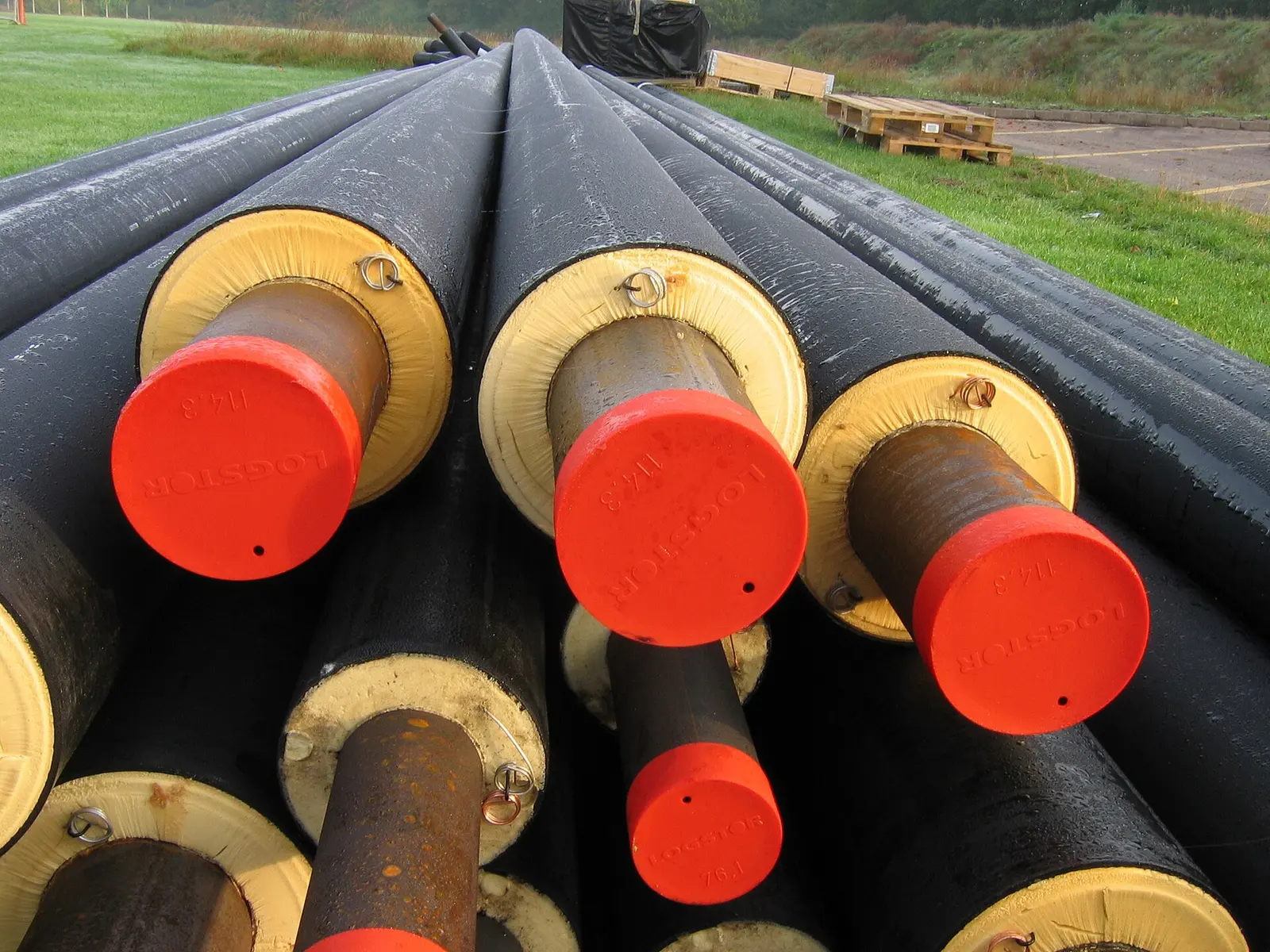
District heating networks carry hot water from central plants to buildings. Large insulated accumulator tanks — often tens of thousands of cubic metres — decouple production from demand and absorb cheap electricity through electric boilers.
Modern low-temperature networks combine recovered heat, renewable heat, heat pumps and seasonal storage.
Key facts
- Supply temp.
- ≈ 60–120 °C
- Day stores
- Steel accumulator tanks
- Seasonal
- Pits, boreholes, aquifers
- Users
- Townships, campuses, industry parks
District heating infrastructure8
- Central heating plants
- Thermal storage tanks
- Hot-water distribution networks
- Steam distribution networks
- Heat exchanger stations
- Pumping stations
- Metering and control systems
- Building-level heat interface units
Commercial and institutional applications9
- Hospitals
- Hotels and resorts
- Airports
- Shopping centres
- Educational campuses
- Industrial parks
- Residential townships
- Data centres
- Large commercial buildings
Related calculators
Calculators are available to staff / admin only.
Related topics
- District CoolingChilled-water, ice and PCM storage shift cooling load to off-peak hours and shrink chiller plants.
- Underground / SeasonalBoreholes, aquifers and large pits hold heat for weeks or seasons — the backbone of solar district heating.
- Heat PumpsIndustrial and large heat pumps upgrade low-grade heat to useful temperatures; storage lets them run at the best hours.
- Solar ThermalFlat-plate, evacuated-tube, trough and Fresnel collectors paired with storage for process heat and district heating.
Project & partnership desk
Planning District Heating?
Tell us your heat demand, site and timeline — BARREL engineers, suppliers and partners will help you scope it.