
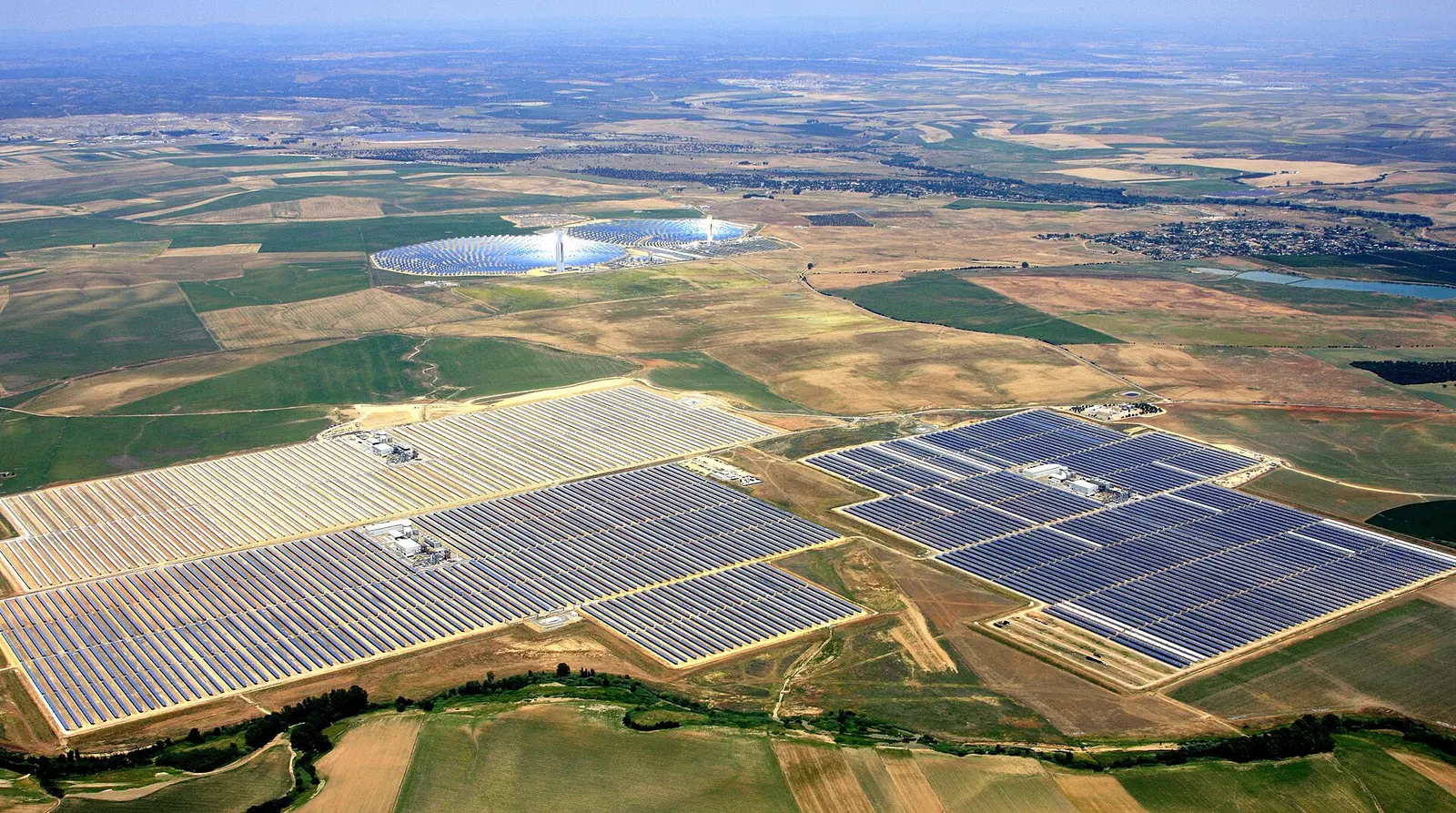
CSP plants concentrate sunlight with heliostats (towers), parabolic troughs or Fresnel reflectors to heat a fluid. Storing that heat in molten salt lets the steam turbine run into the night — the solar multiple and storage hours set the capacity factor.
Hybrid CSP + PV plants use cheap PV by day and CSP storage in the evening peak.
Key facts
- Technologies
- Tower, trough, Fresnel
- Storage
- Two-tank molten salt (typical)
- Hours
- Often 6–15 h of storage
- Cycle
- Steam Rankine; sCO₂ in development
Concentrated Solar Power with thermal storage10
- Solar collector field
- Solar receiver
- Heat-transfer medium
- Thermal storage system
- Hot and cold storage tanks
- Steam generation system
- Steam turbine
- Generator
- Condenser and cooling system
- Electrical switchyard and grid connection
Design parameters7
- Direct normal irradiance (DNI)
- Solar multiple
- Storage hours
- Receiver outlet temperature
- Power block efficiency
- Cooling: wet, dry or hybrid
- Grid dispatch profile
Related calculators
Calculators are available to staff / admin only.
Related topics
- Molten SaltNitrate salts stored between ≈ 290 and 565 °C in hot and cold tanks deliver hours of dispatchable heat and power.
- Solar ThermalFlat-plate, evacuated-tube, trough and Fresnel collectors paired with storage for process heat and district heating.
- Heat-to-PowerSteam Rankine, ORC, sCO₂ and closed-cycle gas turbines convert stored or recovered heat into electricity.
Project & partnership desk
Planning CSP Storage?
Tell us your heat demand, site and timeline — BARREL engineers, suppliers and partners will help you scope it.