
BARREL.ENERGY · Solutions · Energy Storage
Store energy today. Power the world tomorrow.
Storage connects the time of generation with the time of use — balancing supply and demand, firming renewables, cutting peaks and strengthening energy security. BARREL finds the right technology for the application and builds the whole project around it.
From milliseconds to seasons. From battery cells to gigawatt-hour storage infrastructure.
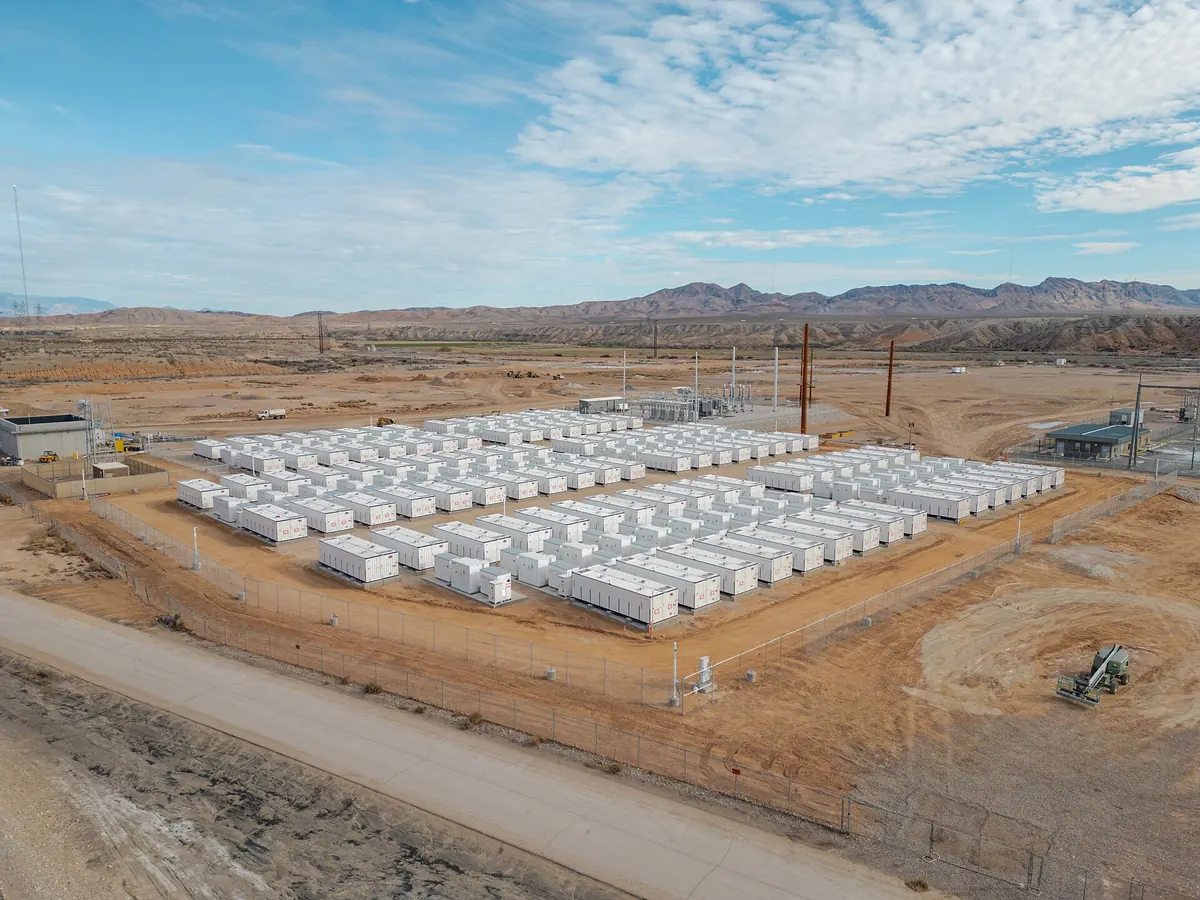
Storage duration spectrum
From fast response to long duration.
A conceptual application spectrum, not fixed technology performance limits — which is why BARREL covers many technologies, not just batteries.
- 01
Seconds to minutes
Power quality / fast response
Supercapacitors · Flywheels · BESS
- 02
Minutes to hours
Grid response / peak management
BESS · Flow batteries · Thermal
- 03
Several hours to days
Renewable shifting / bulk storage
Pumped hydro · Flow · CAES · LAES · Thermal
- 04
Days to weeks
Extended energy availability
Pumped hydro · Hydrogen · Chemical · Emerging LDES
- 05
Seasonal
Long-term energy management
Hydrogen · Underground thermal · Chemical carriers
Four offerings
BESS · Pumped hydro · Thermal · Long-duration
Energy Storage · 01
Battery Energy Storage (BESS)
Advanced battery technology. Intelligent energy management.
BESS store electricity electrochemically and release it on demand — at utility, transmission, distribution, industrial, commercial, institutional and residential level — for renewable firming, peaks, frequency, power quality, backup and flexibility.
BARREL covers the value chain from chemistry and materials to cells, packs, containers, PCS, BMS, EMS, installation, augmentation and recycling, with an OEM / JV partner for batteries.
Applications
- Utility-scale grid storage
- Renewable + storage
- Industrial and commercial
- Substation and distribution
- Data centres and critical infrastructure
- EV charging hubs and bus depots
- Off-grid and remote
Lithium-ion
- LFP — stationary workhorse, no Ni or Co
- NMC — high energy density
- NCA — specialised
- LTO — high power, fast charge
- LMO — blends
Beyond lithium
- Sodium-ion
- Sodium-sulphur
- Sodium-nickel chloride
- Vanadium, zinc-bromine, iron flow
- Lead-acid, AGM, lead-carbon
- Zinc and metal-air
- Solid-state and other emerging
System architecture
- Cells, modules, packs
- Racks and containers
- BMS — SoC, SoH, balancing
- PCS — bidirectional, grid-forming or following
- EMS — scheduling and dispatch
- Transformers, switchgear, metering
- HVAC, liquid cooling, fire and gas
- SCADA and cybersecurity
Manufacturing chain
- Raw materials and chemicals
- Cathode and anode materials
- Electrode coating and calendering
- Cell assembly and filling
- Formation and grading
- Modules, packs, racks
- Container integration
- Recycling
Testing & safety
- Cell qualification
- Module and pack tests
- Cycle-life and capacity
- Environmental and vibration
- Thermal runaway propagation
- FAT and SAT
- Performance verification
Lifecycle
- SoH tracking
- Degradation modelling
- Firmware updates
- Augmentation planning
- Warranty management
- Second life
- Recycling and recovery
Project services
- Duty-cycle analysis
- Chemistry selection
- MW / MWh sizing
- Degradation modelling
- Layout engineering
- PCS and transformer sizing
- Fire and safety engineering
- Grid connectivity
- O&M and augmentation
Standards, certification, fire codes, grid codes and transport rules are set by chemistry, configuration, location and application. Chemistries are chosen on safety, density, cycle life, degradation, temperature, cost and supply — not treated as interchangeable.
Energy Storage · 02
Pumped Hydro Storage
Gigawatt-hour storage. Long-term infrastructure. Grid-scale flexibility.
Water pumped to an upper reservoir when power is available, released through turbines when it is needed — established, large-scale and long-lived.
Pumped hydro is an infrastructure business: land, water, topography, geology, tunnels, reservoirs, turbines and grid connectivity.
Types
- Open-loop — river or existing reservoir
- Closed-loop — off-river reservoirs
- Mine-pit and quarry conversion
- Underground lower reservoir
- Seawater pumped hydro
Reservoirs & civil
- Reservoir siting and capacity
- Dams and embankments
- Lining and seepage control
- Spillways, intakes, outlets
- Powerhouse and caverns
- Access roads
Water conductor
- Headrace and tailrace tunnels
- Penstocks and pressure shafts
- Surge tanks
- Gates and valves
Electro-mechanical
- Reversible pump-turbines
- Separate pumps and turbines
- Motor-generators
- Fixed- or variable-speed
- Governors and inlet valves
- Static frequency converters
- EHV switchyard
Site assessment
- Topographic and DEM surveys
- GIS mapping
- Geology and seismicity
- Hydrology and water availability
- Environmental and social screening
- Forest and land
- Grid connectivity
- Preliminary hydraulic modelling
Applications
- Renewable time-shifting
- Peak-load management
- Frequency regulation
- Reserve capacity
- Curtailment reduction
- Black start, where designed and approved
- Long-duration storage
Viability depends on topography, geology, reservoir design, water, environment and transmission access.
Energy Storage · 03
Thermal Energy Storage
Store heat. Store cold. Use energy when it is needed.
Thermal storage holds heat or cold — used directly for industrial heating, cooling and process needs, or through a power cycle to make electricity.
For electricity-return, efficiency is judged on the full electricity-to-heat-to-electricity chain, not on the thermal store alone.
Heat storage
- Molten salt — two-tank, thermocline
- Sand-based heat batteries
- Concrete, rock, ceramics, refractories
- Hot water — pressurised or stratified
- Thermal oil
- PCM — paraffin, salt hydrates, eutectics
- Thermochemical — redox, calcium looping, zeolites
- Underground — BTES, ATES, PTES
Cold storage
- Ice-on-coil and encapsulated ice
- Ice harvesting and slurry
- Stratified chilled water
- District cooling storage
- Cryogenic and LNG cold recovery
Industrial uses
- Steel, cement, glass, ceramics
- Chemicals and pharma
- Food, dairy, sugar
- Textiles and paper
- Process heat and steam
- Furnace and boiler support
- Heat recovery
Renewable + thermal
- Solar PV + electric thermal storage
- Wind + thermal
- CSP + molten salt
- Renewables + sand storage
- Battery + thermal
- Solar + hot water
Engineering
- Heat balance and thermal modelling
- Capacity and duration
- Temperature and pressure
- Tank and insulation design
- Heat exchangers
- Thermal fluids and corrosion
- Performance testing
Energy Storage · 04
Long-Duration Storage
Store energy for hours, days and beyond.
Long-duration storage is a duration category, not a technology. BARREL compares the options against the required duration, MW, MWh, geography, cycling, efficiency, capital cost, lifetime and maturity — then builds the project around the right one.
Technologies
- Pumped hydro
- Flow batteries — vanadium, zinc-bromine, iron, organic
- Iron-air — multi-day, in development
- Sodium-based
- Compressed air (CAES)
- Liquid air (LAES)
- Hydrogen — power-to-H₂-to-power
- Ammonia and chemical carriers
- Gravity
- Pumped thermal
- Underground and geological
CAES & LAES
- Diabatic, adiabatic, isothermal CAES
- Caverns or pressure vessels
- Compressors and expanders
- Air liquefaction
- Cryogenic tanks
- Cold-energy recovery
Hydrogen pathway
- Electrolysis — alkaline, PEM, SOEC, AEM
- Compression and conditioning
- Gas, liquid, cavern, hydride storage
- Fuel cell or turbine back to power
- Round-trip losses assessed upfront
Applications
- Renewable balancing
- Extended shortfall cover
- Multi-hour grid supply
- Capacity and congestion
- Industrial energy security
- Seasonal energy management
Development steps
- MW, MWh and duration
- Cycles
- Geography and resources
- Technology comparison
- Efficiency and degradation
- CAPEX and OPEX
- Grid and market
- Configuration and models
- Long-term monitoring
Commercial models
- Utility-owned
- Independent storage
- Renewable + storage
- Storage-as-a-Service
- Capacity and flexibility services
- Captive storage
Seasonal storage is a specialised requirement assessed separately from multi-hour storage. Revenue models depend on regulation, market design and grid-service eligibility. Iron-air and other emerging technologies are verified supplier by supplier.
Understanding storage capacity
MW, MWh and hours.
100 MW / 400 MWh = 4 hours at 100 MWNominal, before operating limits and losses. Also: round-trip efficiency, cycle life, DoD, SoC, SoH, self-discharge, auxiliaries, degradation, response time.
Technology map
The right technology for the right duration.
| Technology | Storage form | Typical application |
|---|---|---|
| Lithium-ion BESS | Electrochemical | Grid, C&I, renewable integration |
| Sodium-ion | Electrochemical | Stationary and distributed |
| Flow batteries | Liquid electrolytes | Stationary multi-hour |
| Sodium-sulphur | Electrochemical | Stationary |
| Pumped hydro | Gravitational potential | Large-scale grid |
| CAES | Compressed air | Large-scale |
| LAES | Cryogenic liquid air | Grid-scale |
| Molten salt | Heat | CSP and industrial heat |
| Sand / solid media | Heat | Industrial heat |
| Ice storage | Cooling | HVAC and cooling |
| Hydrogen | Chemical | Long-duration and seasonal |
| Iron-air | Electrochemical | Multi-day, in development |
| Flywheel | Kinetic | Short-duration power |
| Supercapacitor | Electric field | Rapid power response |
| Gravity | Gravitational potential | Emerging stationary |
A high-level map, not a performance guarantee.
Integrated storage
Combining technologies for better performance.
Battery + pumped hydro
Fast response with bulk energy.
Battery + thermal
Power and heat for industry, buildings, data centres.
Battery + hydrogen
Fast response with long-duration storage.
Renewable + battery + thermal
Renewable-powered manufacturing and microgrids.
Pumped hydro + battery + renewable
Multi-service portfolios for large parks.
Battery + flywheel
Power quality and rapid load swings.
Controls: integrated EMS, multi-source and microgrid controllers, grid-forming inverters, SCADA, forecasting and digital twins — Integrated Energy.
Manufacturing, supply chain & circular economy
From raw materials to complete storage systems — and back.
Battery materials
- Lithium and sodium compounds
- Graphite
- Nickel, cobalt, manganese
- Iron phosphate
- Vanadium, zinc, bromine
- Electrolytes
Battery manufacturing
- Cathode and anode
- Electrodes and cells
- Testing and grading
- Modules and packs
- Racks and containers
- BMS and PCS integration
Pumped hydro equipment
- Pump-turbines
- Motor-generators
- Penstocks and pressure shafts
- Gates and valves
- Governors
- Transformers and switchgear
Thermal storage equipment
- Molten salt and oil tanks
- Sand and ceramic systems
- PCM systems
- Heat exchangers
- Electric boilers
- Insulation
Mechanical & chemical
- Compressors and expanders
- Cryogenic tanks
- Flywheel rotors
- Electrolysers and fuel cells
- Hydrogen vessels
- Catalysts and membranes
Circular economy
- Second-life batteries
- Black mass recovery
- Lithium, nickel, cobalt recovery
- Component refurbishment
- End-of-life management
Battery handling, transport, storage, recycling and disposal follow the applicable environmental, hazardous-material and battery-waste rules.
Project lifecycle
From concept to commissioning — and beyond.
- 01
Requirement assessment
- 02
Technology selection
- 03
Resource & site
- 04
Feasibility study
- 05
Project development
- 06
Basic engineering
- 07
Detailed engineering
- 08
Manufacturing & procurement
- 09
Construction
- 10
Installation & integration
- 11
Testing & commissioning
- 12
Operation
- 13
Maintenance & augmentation
- 14
Recycling & decommissioning
BARREL OS — storage intelligence
Every MW. Every MWh. Every asset.
Technology-aware: a battery dashboard differs from a pumped hydro or thermal one, while project, procurement, finance and asset modules are shared. Monitoring, analytics and workflow only — never a replacement for the certified BMS, plant protection, fire protection or turbine control.
Explore BARREL OSStorage dashboard
Technology, MW, MWh, duration, status, cost
BESS management
Cells, racks, SoC, SoH, cycles, warranty
Pumped hydro
Reservoir levels, water balance, schedules
Thermal storage
Medium, temperature, heat in/out, losses
Long-duration
Cycles, efficiency, auxiliaries, benchmarks
Engineering & design
Drawings, specifications, BOQ/BOM
Procurement & manufacturing
Manufacturers, RFQs, factory inspection
Construction & commissioning
Progress, QA/QC, tests, handover
Commercial & finance
Budgets, revenue models, contracts
Asset management
Maintenance, degradation, augmentation
BARREL AI
Sizing, degradation, dispatch, risk analysis
Industries & applications
Storage for every part of the energy system.
Utilities & grid operators
Grid storage, peaks, flexibility, frequency.
Renewable developers
Solar- and wind-plus-storage, hybrids.
Industry & manufacturing
Captive storage, peaks, power quality, backup.
Infrastructure & transport
EV charging, railways, airports, ports.
Data centres
High-reliability supply, UPS integration.
Commercial & institutional
Hospitals, campuses, IT parks, hotels.
Mining & heavy industry
Remote power, microgrids, long duration.
Agriculture & rural
Solar irrigation, cold storage, local grids.
Hydrogen & chemicals
Hydrogen storage, feedstock, power-to-X.
Why BARREL — not just storage equipment, the complete storage ecosystem
Technology-neutral
Requirement first; the answer may be battery, hydro, thermal, mechanical, hydrogen or a mix.
Every duration
From milliseconds of response to multi-day and seasonal pathways.
Complete value chain
Feasibility and engineering to procurement, commissioning and lifecycle.
Manufacturing opportunities
Materials, cells, packs, containers and equipment through partners.
Grid & industrial integration
Storage as part of the wider energy system.
Digital project management
BARREL OS, technology-aware for each storage type.
Qualified ecosystem
OEMs, EPC contractors, consultants and service providers.
Transparent maturity
Established, commercial, developing and emerging kept apart.
Partner with BARREL
Let's build the next generation of energy storage.
Frequently asked questions
What clients ask first.
What is energy storage?
Storing energy in one form and making it available later — electrical, electrochemical, mechanical, thermal or chemical.
What are the main storage technologies?
Batteries, pumped hydro, thermal storage, compressed air, liquid air, hydrogen, flywheels, supercapacitors and emerging technologies.
What is the difference between MW and MWh?
MW is the power rating — how fast a system charges or discharges. MWh is the energy capacity — how much it stores.
What is a four-hour battery?
100 MW with 400 MWh has a nominal four-hour discharge at rated power, before operating limits and losses.
What is long-duration energy storage?
Storage designed to supply energy over extended periods — pumped hydro, flow batteries, CAES, LAES, thermal, hydrogen and others.
Is lithium-ion the only battery option?
No — sodium-ion, sodium-sulphur, flow, lead-acid, zinc-based, iron-air and advanced chemistries also exist, at different maturities.
What is pumped hydro storage?
Pumping water to an upper reservoir and releasing it through turbines to generate electricity when needed.
What is thermal energy storage?
Storing heat or cold for later use — molten salt, sand, concrete, hot water, ice and phase-change materials.
Can batteries be combined with pumped hydro?
Where the design and commercial case justify it, a hybrid pairs battery response with bulk hydro storage.
Can storage support renewable energy?
It shifts renewable energy to demand periods, smooths output, manages peaks and adds grid flexibility.
Does BARREL manufacture batteries?
Through manufacturing and technology partnerships — an OEM / JV partner for batteries. The specific role is named for each project and product.
Does BARREL provide turnkey storage?
Development, engineering, procurement, infrastructure, integration and lifecycle services, subject to scope, qualifications and execution arrangements.
Store energy today. Power the world tomorrow.
The right storage technology, and the whole project around it.
Utility-scale batteries, pumped hydro, thermal storage for a plant, long-duration options or a manufacturing and technology partnership — share the power, energy, duration and application you need.
- Application and operating profile
- MW and MWh (or hours)
- Site, grid and resources
- Timeline and commercial model
Planning a power project? Let's build it on BARREL.
Every power project has its own technical requirements, commercial objectives, regulatory dependencies and implementation challenges. Tell us what you are planning, where you are in the project lifecycle and what support you need.
BARREL — Bharat Atom Renewable Resources Energy Limited · Rooted in Bharat. Global by Vision.